

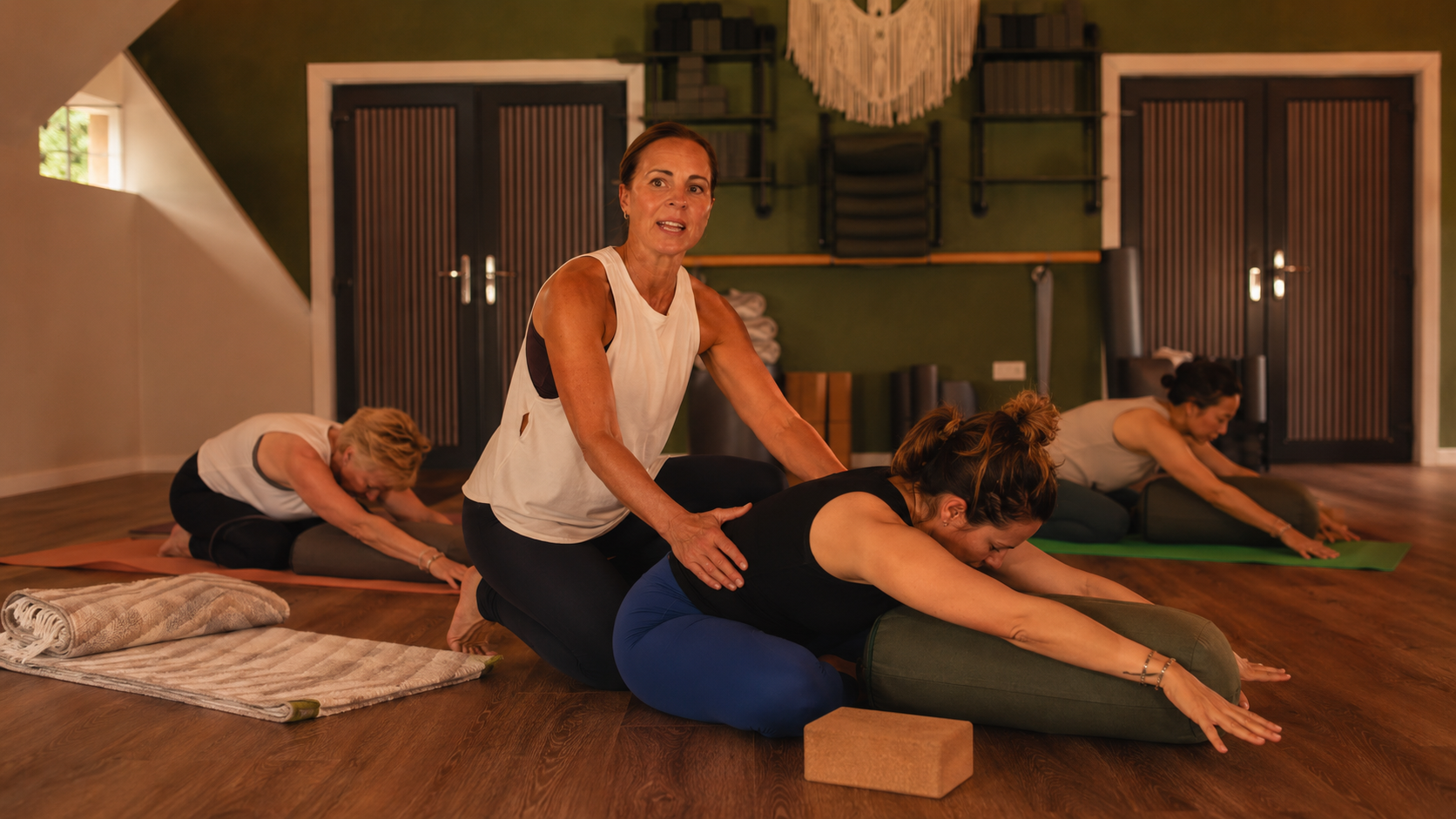
Hatha vs Vinyasa Yoga: Which Style Is Right for You? is designed to help you make a confident, realistic choice. Whether you are researching Hatha vs Vinyasa yoga for the first time or refining an existing routine, the aim is to match the practice to your goals, experience and current wellbeing.
Pace
This part of Hatha vs Vinyasa Yoga: Which Style Is Right for You? helps turn general advice into a practical decision. Start from your present ability and priorities, then choose the simplest next step you can repeat.
Ask questions before booking if you are unsure. Clear information about pace, facilities, equipment and teacher support makes it easier to arrive prepared and get more from the session.
poses
A guided class gives Hatha vs Vinyasa yoga a clear structure: an arrival phase, progressive movement or practice, and time to settle at the end. Exact sequences vary, so read the class description rather than assuming every teacher uses the same format.
Good teaching offers options without making them feel like lesser versions. Choose the variation that lets you breathe steadily and maintain control, and ask for clarification whenever an instruction is unclear.
strength
People often explore Hatha vs Vinyasa yoga to support movement, strength, mobility or relaxation. The most useful outcome depends on the class style, the teacher, your starting point and how consistently you practise.
Progress is rarely linear. Notice practical changes such as easier everyday movement, improved control, a more settled breathing pattern or better confidence—not only how far you can move into a pose.
flexibility
People often explore Hatha vs Vinyasa yoga to support movement, strength, mobility or relaxation. The most useful outcome depends on the class style, the teacher, your starting point and how consistently you practise.
Progress is rarely linear. Notice practical changes such as easier everyday movement, improved control, a more settled breathing pattern or better confidence—not only how far you can move into a pose.
beginner suitability
For a first session, simplicity is useful: arrive early, wear comfortable clothing, bring water and let the teacher know you are new. You do not need specialist flexibility, perfect equipment or prior knowledge.
Treat the first few visits as orientation rather than a performance test. Learn the room, the teaching style and the pace; use rests and modifications whenever they help you stay steady and attentive.
comparison table
The best option is the one that matches your current goal, preferred pace and recovery needs. A slower class can still be demanding, while a dynamic class can be adapted; labels are a guide rather than a guarantee.
Before booking, check the class description and ask the studio about temperature, experience level and typical intensity. Trying more than one style is often the clearest way to make a confident choice.
choosing a class
The best option is the one that matches your current goal, preferred pace and recovery needs. A slower class can still be demanding, while a dynamic class can be adapted; labels are a guide rather than a guarantee.
Before booking, check the class description and ask the studio about temperature, experience level and typical intensity. Trying more than one style is often the clearest way to make a confident choice.
A practical next step
If this guide has clarified your options, the next step is to explore YogaLife’s current timetable and choose a session that fits your week. Compare classes and book, and contact the team if you would like help choosing between classes.
Related YogaLife resources
- Explore the relevant class or service
- Read the related YogaLife guide
- Check availability and next steps
- What Is Yin Yoga? Benefits, Poses and Who It Suits
- Power Yoga vs HIIT Yoga: Which Workout Matches Your Goals?
- What Is Yoga Nidra? A Beginner’s Guide to Yogic Sleep
Important: This article provides general information and is not medical advice. Work within your own limits and seek professional guidance when a health condition, injury, pregnancy or persistent symptom may affect participation.