
Yoga for Stress Relief: Poses, Breathing and Classes That Help You Reset is designed to help you make a confident, realistic choice. Whether you are researching yoga for stress relief for the first time or refining an existing routine, the aim is to match the practice to your goals, experience and current wellbeing.
Stress response
People often explore yoga for stress relief to support movement, strength, mobility or relaxation. The most useful outcome depends on the class style, the teacher, your starting point and how consistently you practise.
Progress is rarely linear. Notice practical changes such as easier everyday movement, improved control, a more settled breathing pattern or better confidence—not only how far you can move into a pose.
movement
This part of Yoga for Stress Relief: Poses, Breathing and Classes That Help You Reset helps turn general advice into a practical decision. Start from your present ability and priorities, then choose the simplest next step you can repeat.
Ask questions before booking if you are unsure. Clear information about pace, facilities, equipment and teacher support makes it easier to arrive prepared and get more from the session.
five poses
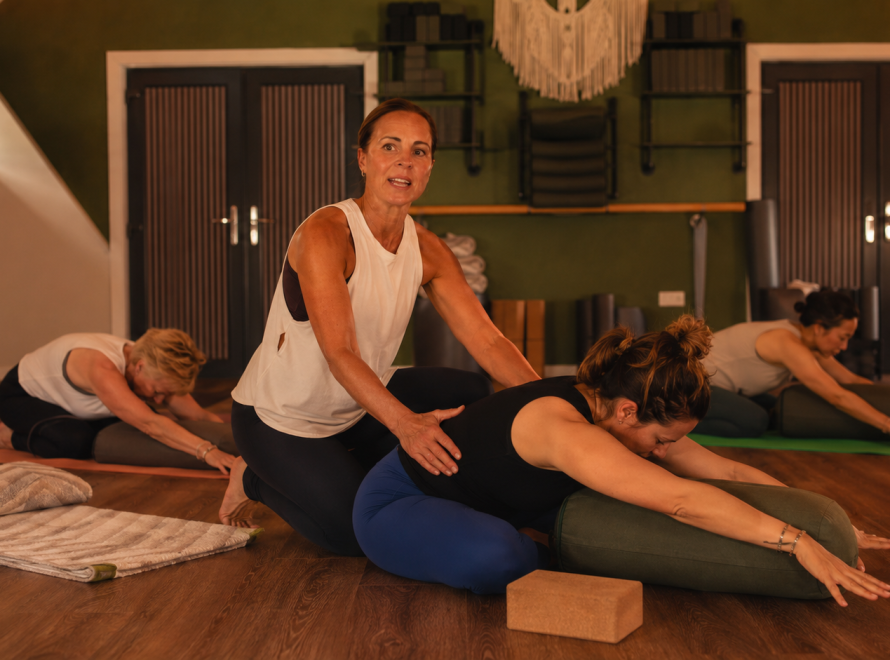
A guided class gives yoga for stress relief a clear structure: an arrival phase, progressive movement or practice, and time to settle at the end. Exact sequences vary, so read the class description rather than assuming every teacher uses the same format.
Good teaching offers options without making them feel like lesser versions. Choose the variation that lets you breathe steadily and maintain control, and ask for clarification whenever an instruction is unclear.
breathing practice
This part of Yoga for Stress Relief: Poses, Breathing and Classes That Help You Reset helps turn general advice into a practical decision. Start from your present ability and priorities, then choose the simplest next step you can repeat.
Ask questions before booking if you are unsure. Clear information about pace, facilities, equipment and teacher support makes it easier to arrive prepared and get more from the session.
restorative styles
This part of Yoga for Stress Relief: Poses, Breathing and Classes That Help You Reset helps turn general advice into a practical decision. Start from your present ability and priorities, then choose the simplest next step you can repeat.
Ask questions before booking if you are unsure. Clear information about pace, facilities, equipment and teacher support makes it easier to arrive prepared and get more from the session.
simple routine
Build the routine around the week you actually have. One well-chosen class that you can repeat is more valuable than an ambitious plan that creates fatigue or is abandoned after a few days.
Allow recovery between demanding sessions and use gentler movement on lower-energy days. Review the plan after two to four weeks, then adjust frequency according to enjoyment, sleep, soreness and progress.
when to get help
This part of Yoga for Stress Relief: Poses, Breathing and Classes That Help You Reset helps turn general advice into a practical decision. Start from your present ability and priorities, then choose the simplest next step you can repeat.
Ask questions before booking if you are unsure. Clear information about pace, facilities, equipment and teacher support makes it easier to arrive prepared and get more from the session.
A practical next step
If this guide has clarified your options, the next step is to explore YogaLife’s current timetable and choose a session that fits your week. Try a restorative class, and contact the team if you would like help choosing between classes.
Related YogaLife resources
- Explore the relevant class or service
- Read the related YogaLife guide
- Check availability and next steps
- Yoga for Back Pain: Gentle Movement, Safety and Class Choices
- Can Yoga Improve Flexibility? What Progress Really Looks Like
- Yoga for Better Sleep: An Evening Routine to Help You Wind Down
Important: This article provides general information and is not medical advice. Work within your own limits and seek professional guidance when a health condition, injury, pregnancy or persistent symptom may affect participation.