
Yoga for Back Pain: Gentle Movement, Safety and Class Choices
YogaLife Journal
Movement and wellbeing · Updated August 2026
Gentle, appropriately chosen movement may help some people manage uncomplicated back discomfort, but “yoga for back pain” should never mean pushing through symptoms or treating a class as a substitute for assessment.
Back pain is common and can have many possible contributors. For some people, staying active and gradually rebuilding confidence in movement forms part of recovery. For others, symptoms need individual assessment before a group class is appropriate. The safest starting point is to understand your symptoms, rule out warning signs and choose a class that can be adapted.
Get urgent medical help: do not attend a yoga class if back or leg pain is accompanied by new bladder or bowel disturbance, numbness around the genitals, buttocks or inner thighs, sexual-function changes, or severe/worsening weakness affecting both legs. These can be warning signs of cauda equina syndrome and require emergency assessment.
Understanding back pain before choosing yoga
Back discomfort may follow an unfamiliar activity, a period of reduced movement, repetitive loading or a flare-up of a longer-term problem. Sometimes pain travels into a leg or is accompanied by pins and needles, numbness or weakness. Because similar symptoms can have different causes, a yoga teacher cannot diagnose the problem.
If pain is new, severe, worsening, linked to an accident, associated with feeling generally unwell or accompanied by neurological symptoms, seek healthcare advice. If it is mild and uncomplicated, gentle activity may be reasonable, but the movement should be tolerable and easy to reduce.
Pain intensity does not always map neatly to tissue damage, yet pain is still useful information. The goal is not to ignore it. Use it to pace activity, choose a smaller range and decide when professional input is needed.
What does the evidence say about movement?
NICE guidance for low back pain and sciatica recommends considering exercise programmes selected around a person’s needs, preferences and capabilities. It does not identify one universally superior exercise. That matters: a suitable class is one you can perform safely, tolerate and continue—not simply one marketed for back pain.
NHS physiotherapy guidance also encourages people with uncomplicated low back pain to remain as active as possible and build activity gradually. Some discomfort can occur when returning to movement, but intolerable or escalating pain is a signal to reduce the amount and seek advice.
Yoga may combine mobility, controlled strength, breathing and relaxation. Those elements can be useful, but outcomes vary. Avoid claims that yoga can “cure” back pain, realign the spine or fix every cause. A realistic aim is to support comfortable movement, confidence and a sustainable activity routine.
A useful benchmark: after a suitable session, you should feel that the movement was manageable. A mild temporary response may occur, but symptoms should not become sharply worse, spread significantly or introduce new numbness or weakness.
Gentle movement principles
There is no single list of poses that suits every back problem. A position that feels comfortable for one person may aggravate another. Use these principles rather than chasing a prescribed shape:
- Start small: use a comfortable range and a slower pace.
- Keep breathing: avoid bracing or holding your breath to force a position.
- Move with control: pay attention to transitions as well as the final pose.
- Use support: blocks, bolsters, blankets, a wall or a chair can reduce demand.
- Change one thing at a time: increase duration, range or frequency gradually rather than all at once.
- Stop for concerning symptoms: sharp pain, spreading symptoms, new tingling, numbness, weakness, dizziness or loss of control are not goals to work through.
Which YogaLife class might be appropriate?
Class names are only a starting point. Speak to the YogaLife team before booking, explain that you are managing back symptoms and ask about pace, heat, equipment and how easily the session can be adapted.
Restorative Yoga
A slower, prop-supported format may suit people prioritising comfort and relaxation. Long-held positions still need to feel appropriate for your symptoms.
Hatha Yoga
A measured pace can provide more time to understand instructions and adjust positioning. Confirm the exact class level before attending.
YogaLife Fundamentals
A foundations-led session may help new students learn technique and communicate with teachers, but it is not a clinical rehabilitation class.
Dynamic or heated classes
Power, HIIT and strongly heated sessions may be less suitable during an active flare-up. Heat can change how movement feels, so do not use warmth to force range.
Modifications that can make a class more manageable
Arrive early enough to speak privately with the teacher. Describe what you know about your symptoms, what movements tend to aggravate them and any advice you have received from a clinician. Agree that you will rest or leave if the class is not suitable.
- Use a chair or wall for balance and to reduce the depth of standing positions.
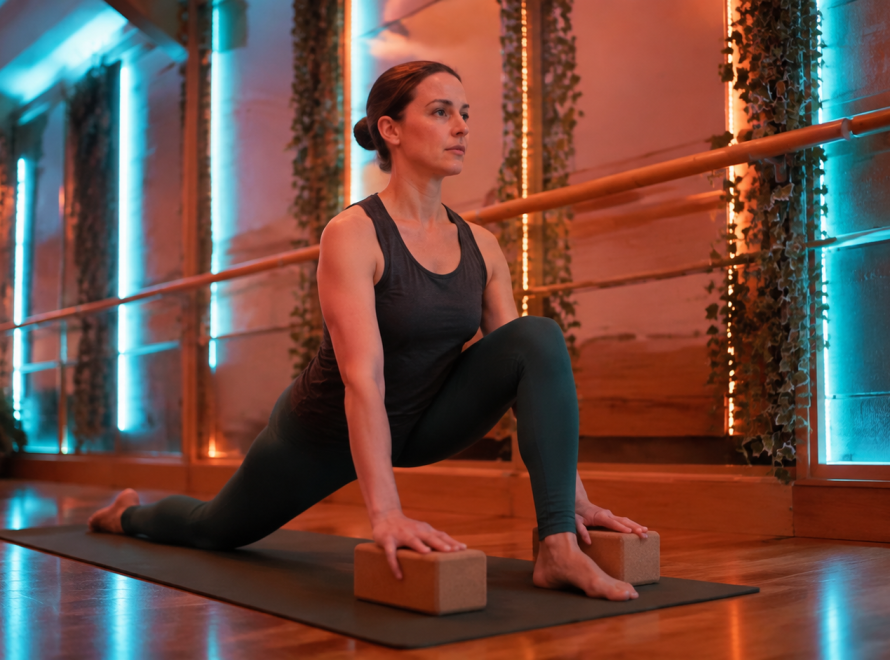
- Place blocks under the hands rather than reaching towards the floor.
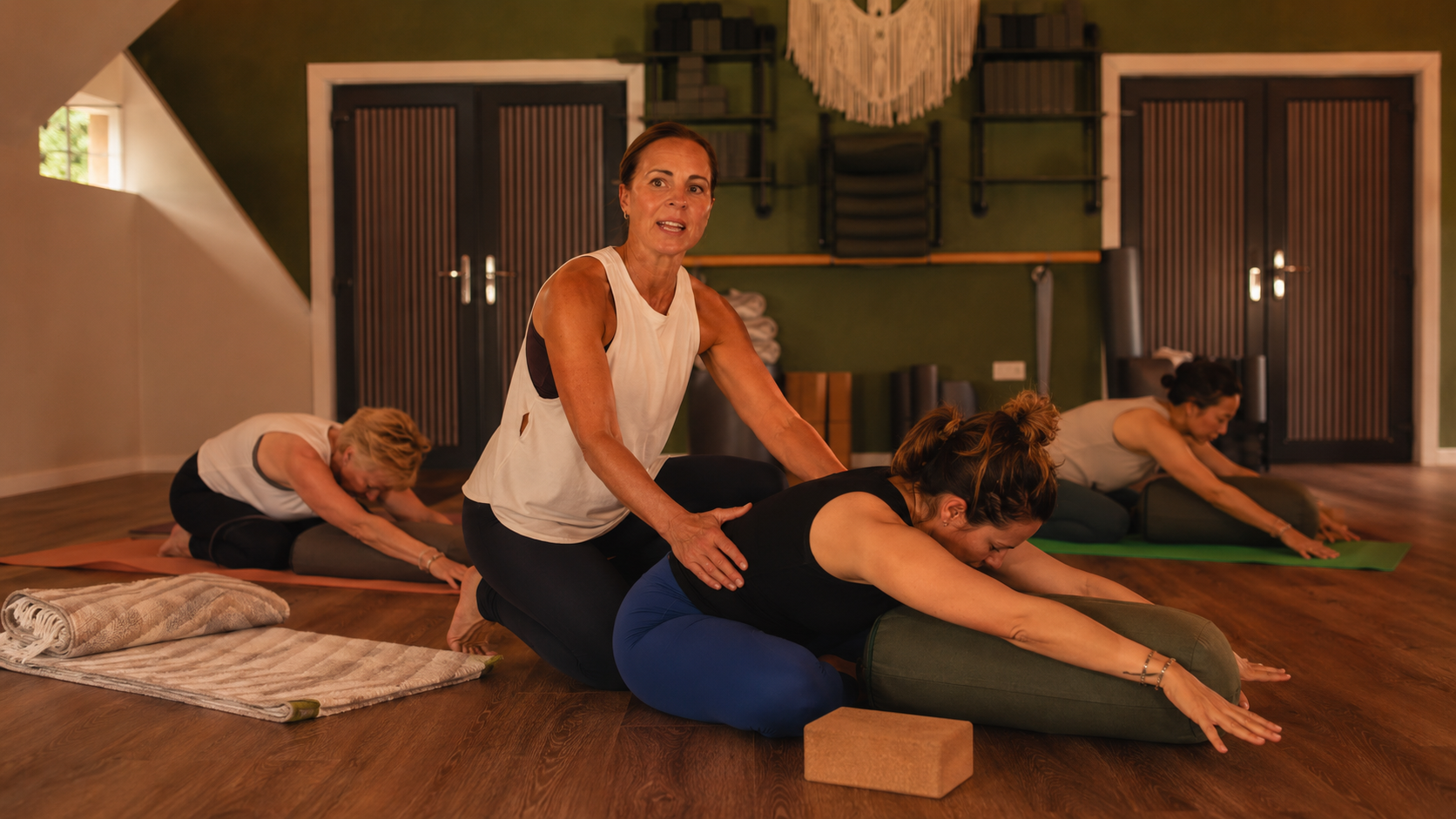
- Use a bolster or folded blanket to support comfortable floor positions.
- Keep knees bent when straight legs create excessive pulling or discomfort.
- Reduce or skip deep twists, forceful forward folds, strong backbends or rapid transitions when they aggravate symptoms.
- Choose a neutral resting position instead of assuming Child’s Pose is comfortable for everyone.
Hands-on adjustments should never be assumed. Tell the teacher if you do not want to be touched, and do not allow anyone to push you deeper into a position.
Back-pain warning signs
Most back pain is not caused by a medical emergency, but some symptom combinations require prompt assessment. Seek urgent medical help rather than attending class if you develop:
- new difficulty starting, controlling or sensing urination;
- new loss of bowel control or altered sensation during a bowel movement;
- numbness or altered feeling around the genitals, buttocks, back passage or inner thighs;
- new sexual-function or genital-sensation changes;
- severe or worsening weakness affecting both legs, or rapidly progressing symptoms;
- back and leg pain that has progressed to significant symptoms in both legs.
If you are unsure whether symptoms are urgent, seek medical advice. Do not wait for a yoga teacher to assess them.
When to speak to a healthcare professional
Contact a GP, physiotherapist or appropriate healthcare professional if symptoms are persistent, worsening, repeatedly returning, limiting everyday activity or associated with leg pain, pins and needles, numbness or weakness. Advice is also sensible after significant trauma, recent surgery or treatment, or when pregnancy or another health condition changes what activity is appropriate.
A physiotherapist can assess your individual presentation and help you plan graded activity. If a clinician recommends yoga, ask what ranges, loads or positions should be modified and share that information with the teacher.
Frequently asked questions
Can yoga make back pain worse?
Any activity can aggravate symptoms if the intensity, range or timing is unsuitable. Start gently, avoid forcing positions and stop if symptoms become sharp, spread or introduce neurological changes.
Is Restorative or Hatha yoga always safe for back pain?
No class label guarantees suitability. Even a slow class can include a position that is uncomfortable for a particular person. Discuss symptoms with the teacher and obtain clinical advice when needed.
Should I practise during a flare-up?
That depends on the symptoms and advice you have received. Gentle activity may help some people, while others need assessment or a temporarily modified routine. Do not attend if warning signs are present.
Related YogaLife resources
Health-information sources
- NICE: exercise and physical activity for low back pain and sciatica
- Guy’s and St Thomas’ NHS Foundation Trust: low back pain, physiotherapy and exercise
- Oxford University Hospitals NHS Foundation Trust: cauda equina syndrome awareness
Medical disclaimer: This article provides general information and does not diagnose or treat back pain. Seek personalised advice from an appropriate healthcare professional. Call 999 or attend A&E for symptoms that may indicate a medical emergency.
CHOOSE CAREFULLY
Ask about a suitable YogaLife class
Tell the team about your experience and current needs before booking. A yoga class is not a substitute for medical assessment.