

Can Yoga Improve Flexibility? What Progress Really Looks Like
YogaLife Journal
Flexibility guide · Wilmslow & Handforth · Updated August 2026
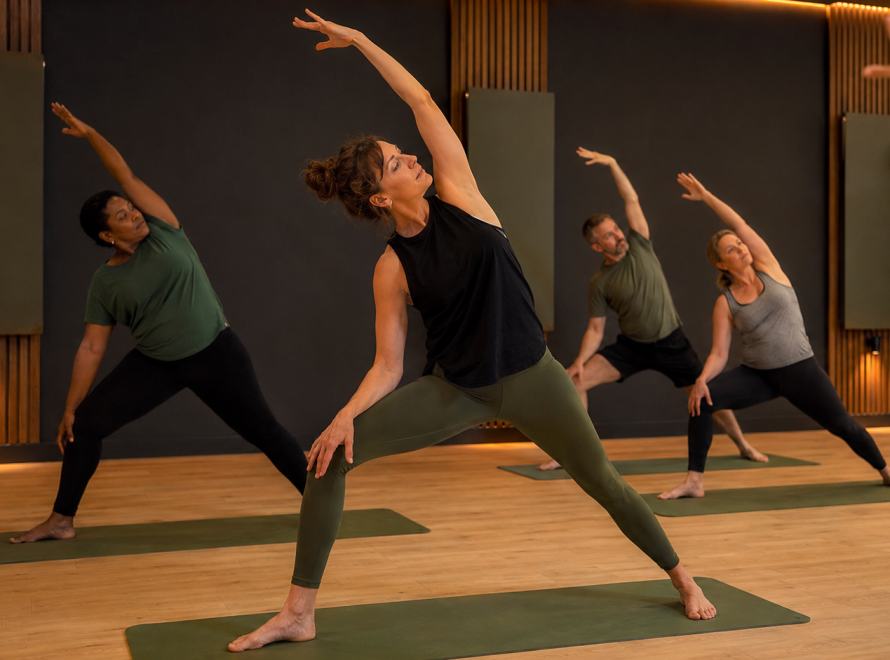
Yes, regular yoga can improve flexibility, but useful progress is not measured by forcing a split or copying the deepest pose in the room. It is usually seen as more comfortable movement, better control and greater confidence within a range that suits your body.
Your starting point, anatomy, age, activity, injuries, class choice and consistency all influence what changes. Some people notice that familiar movements feel easier within a few weeks; lasting changes generally need repeated practice over a longer period. There is no honest universal deadline.
This guide explains what yoga can and cannot change, how to practise without chasing pain, and which YogaLife classes may suit different goals. If you are completely new, begin with the YogaLife class guide or view the current timetable.
Flexibility vs mobility: what is the difference?
Flexibility describes how far a muscle and the surrounding tissues can lengthen or allow a joint to move. Mobility is broader: it includes the ability to reach a range and control it using strength, coordination and awareness.
For everyday life, mobility is often the more useful target. Reaching towards the floor is flexibility; lowering into a position, staying balanced and standing back up with control is mobility. Yoga can train both because a class may combine held positions with active transitions, balance and body-weight strength.
Flexibility may look like
- a more comfortable hamstring stretch;
- greater shoulder range overhead;
- less resistance in a supported hip position;
- easier movement into a familiar pose.
Mobility may look like
- using that range without losing balance;
- moving smoothly rather than forcing;
- maintaining steady breathing and control;
- returning from the position confidently.
Neither requires every joint to become extremely mobile. Bone shape and other anatomical differences affect the range available, so two people can practise consistently and still look different in the same pose.
How long does yoga take to improve flexibility?
A first class may create a temporary feeling of ease because you are warmer, more relaxed and familiar with the movements. That is different from a lasting increase in range. Longer-term change depends on repeated exposure, appropriate intensity and sufficient recovery.
During the first two to four weeks, progress may be mainly technical: learning where to place your feet, how to use props and when to reduce the range. Over roughly six to twelve weeks of regular practice, some people notice measurable changes in familiar movements. Others progress more slowly, particularly where an injury, long break from activity or protective tension is involved.
A realistic expectation: look for small changes over months, not dramatic transformation in days. The aim is a range you can use comfortably and repeatedly—not a race to an end position.
Progress is rarely linear. Sleep, stress, temperature, time of day and previous exercise can change how a pose feels from one session to the next. A stiffer day does not mean the practice has stopped working.
How often should you practise?
For most beginners, one or two well-paced classes each week is a practical starting point. A short, comfortable home sequence between classes can provide another exposure without turning flexibility into a daily test. Regular moderate practice is generally more useful than one very intense session followed by a long gap.
People already training several times per week should count yoga as part of the total workload. A dynamic Power or Vinyasa class may require recovery, while a slower session can still feel demanding when positions are held near the end of your range.
- Once weekly: a manageable way to learn technique and build the habit.
- Twice weekly: gives more frequent practice while leaving recovery time.
- Short movement most days: can suit experienced practitioners when it stays easy and varied.
- Intense stretching every day: is unnecessary and may irritate sensitive muscles or joints.
See How Often Should You Do Yoga? for goal-based weekly examples.
Which areas can yoga help?
A balanced class can explore the hips, hamstrings, calves, ankles, spine, chest and shoulders. The most useful area to work on depends on what you want to do more comfortably—not which body part appears tightest in a photo.
| Area | Yoga examples | Useful progress sign |
|---|---|---|
| Hips | Supported lunges, low squats and controlled rotations. | Moving through daily steps or floor positions with more ease. |
| Hamstrings | Bent-knee folds, reclined leg work and gentle half splits. | Less strain while hinging, without rounding or pulling aggressively. |
| Calves and ankles | Short lunges, ankle rocks and controlled heel lowering. | A steadier squat, walk or lunge within a comfortable range. |
| Shoulders and chest | Arm reaches, wall-supported shapes and gentle chest opening. | Easier overhead movement without rib flare or pinching. |
| Spine | Cat–cow, side bending and comfortable rotation. | Smoother movement rather than maximum twisting. |
Do not assume that every sensation needs stretching. A feeling of tightness may also reflect fatigue, weakness, stress or the body protecting an irritated area. Strength and control can sometimes be more useful than adding further range.
How to improve flexibility safely
Start after a gentle warm-up and move into positions gradually. A mild to moderate stretching sensation may be appropriate; sharp pain, joint pinching, burning, numbness or tingling is a signal to stop and change the position. Breathing should remain steady.
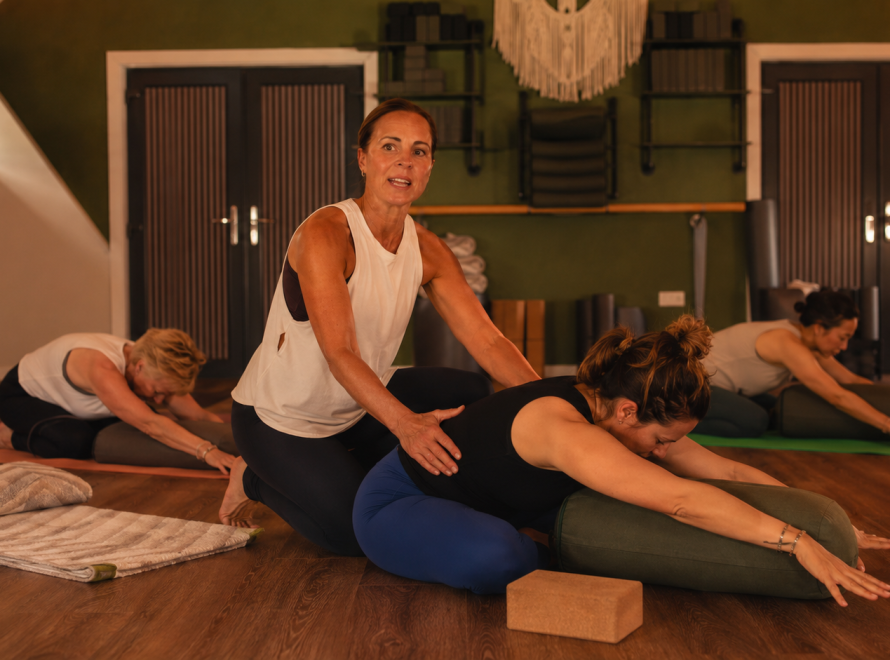
- Use props early: blocks, straps, cushions and a wall bring the position to you and reduce the temptation to collapse into it.
- Keep some muscular effort: active feet, legs and trunk help support a range rather than hanging passively on joints.
- Choose repeatable intensity: finish with the sense that you could have done slightly more.
- Vary the practice: combine gentle holds, active mobility, balance and strength instead of repeating one deep stretch.
- Recover: allow demanding areas to settle before loading them heavily again.
People who are naturally very flexible or hypermobile should be particularly cautious about chasing depth. Stability, strength and awareness of mid-range positions may be more valuable. Tell the teacher about relevant injuries, joint instability, pregnancy or medical conditions before class.
Which yoga style is best for flexibility?
Hatha Yoga is often a strong starting point because the pace can provide time to understand alignment, props and different options. Explore Hatha Yoga at YogaLife.
Slow Flow links positions with controlled movement. It can help turn passive range into usable mobility while keeping the pace accessible. See the Slow Flow class.
Yin Yoga uses longer-held, mostly floor-based positions. It can provide time to settle, but longer does not mean harder is better. Use support and remain well short of pain. Read What Is Yin Yoga? or view the Yin Yoga class.
Vinyasa or Power Yoga can develop active mobility and strength through transitions, but the pace may give beginners less time to adjust. Choose them because you enjoy the style and can maintain control—not because faster must produce quicker flexibility gains. The Hatha vs Vinyasa guide explains the difference.
How to measure flexibility progress
Choose two or three movements that matter to you and review them every four weeks under similar conditions. Testing every day adds noise and can turn the practice into a performance exercise.
- Can you reach the same position with less effort?
- Can you breathe normally and keep your jaw and shoulders relaxed?
- Do you need less support while maintaining good control?
- Can you enter and leave the range smoothly?
- Has an everyday task—such as reaching, kneeling or getting up from the floor—become easier?
Photos can show visible change but should not be the only measure. Camera angle, warm-up and pose technique can create misleading comparisons. Comfort, control and function matter more than appearance.
Frequently asked questions
Do I need to be flexible before starting yoga?
No. Flexibility is not an entry requirement. A well-led beginner-friendly class offers props, smaller ranges and alternatives so you can practise from your current starting point.
Is yoga better than stretching?
Yoga can include stretching, but it may also add balance, strength, breathing and transitions. Neither is automatically better; choose the method you can perform safely and consistently for your goal.
Should stretching hurt to work?
No. Pain is not evidence of an effective stretch. Reduce the range or stop if you feel sharp pain, joint pinching, numbness, tingling or symptoms that persist after the session.
Can everyone become equally flexible?
No. Anatomy, training history, age and health all influence available range. Meaningful personal progress does not require matching another person’s pose.
What if one side is less flexible?
Small differences are common. Work both sides within a comfortable range rather than forcing symmetry. A sudden or painful change, weakness or persistent restriction should be assessed appropriately.
Continue exploring YogaLife
Further reading
Important: This article provides general information and is not medical advice. Work within your own limits and seek professional guidance when a health condition, injury, pregnancy or persistent symptom may affect participation.
MOVE WITH MORE EASE.
Start a consistent yoga practice
Choose a YogaLife class that matches your experience, preferred pace and flexibility goals.