

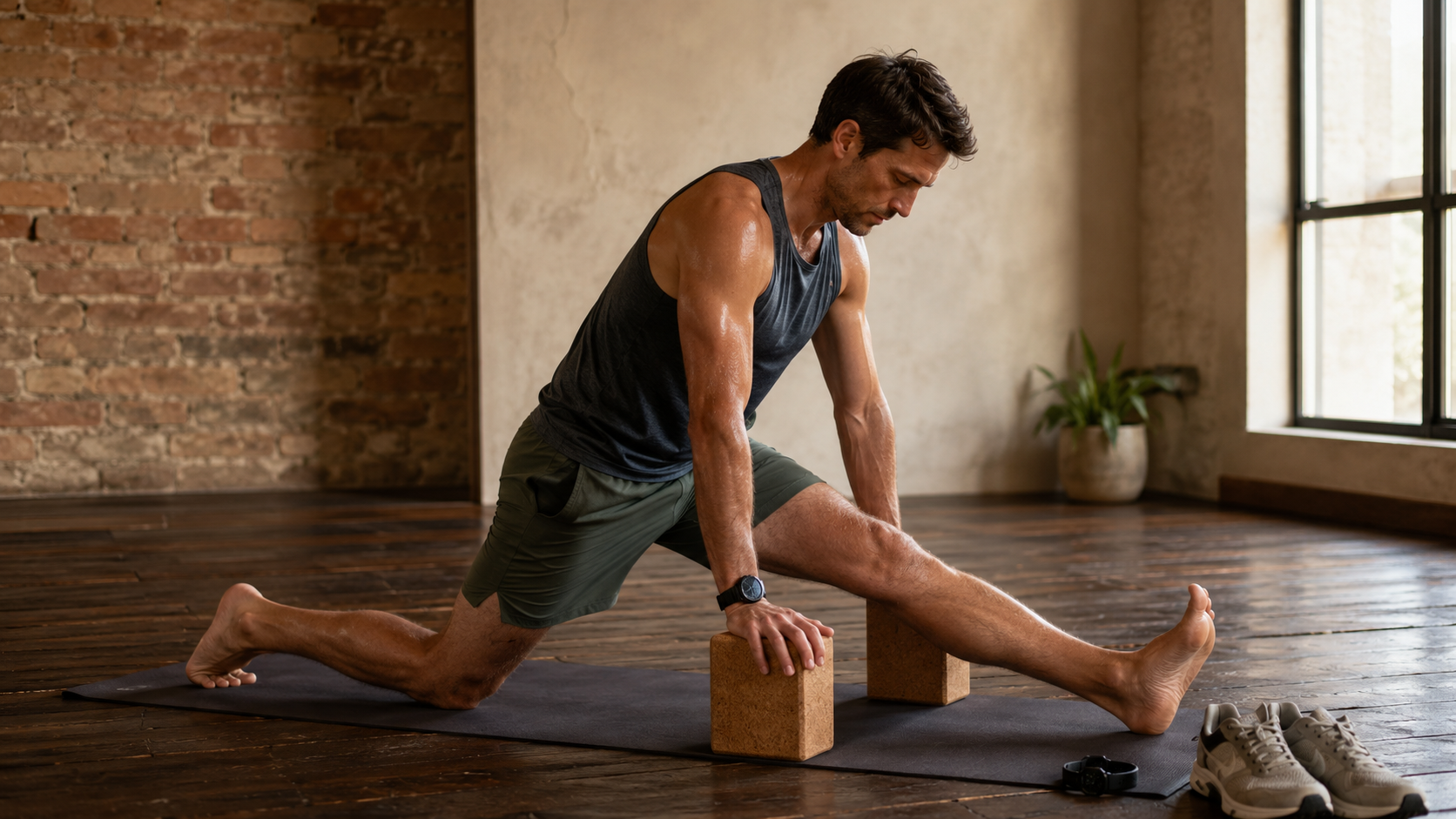
Yoga for Runners: Strength, Mobility and Recovery
YogaLife Journal
Running support guide · Wilmslow & Handforth · Updated August 2026
Yoga can complement running by developing controlled mobility, balance, body awareness and whole-body strength. It cannot replace a sensible running plan, rest days or targeted rehabilitation, but the right class can add useful variety without becoming another hard workout.
Runners do not automatically need to become as flexible as possible. Running requires repeatable force, coordination and enough movement at the ankles, hips and trunk—not maximum pose depth. Yoga is most useful when it supports those demands and fits around the runs that matter.
This guide explains how to select timing, intensity and class style. To compare local sessions, explore Slow Flow at YogaLife, Yin Yoga or the current timetable.
What do runners need from yoga?
A runner’s main training should remain running. Easy mileage, faster sessions, long runs and recovery need to be progressed at a rate the body can tolerate. The NHS advises building running pace and distance gradually and using rest days between beginner runs.
Yoga should solve a practical problem or add something enjoyable. That might be better balance, confidence moving through different ranges, a controlled strength challenge, relaxation after a stressful week or simply an alternative indoor session.
Useful aims
- controlled ankle and hip movement;
- single-leg balance and coordination;
- trunk and upper-body endurance;
- a lower-impact change of pace;
- breathing and deliberate recovery.
Claims to avoid
- “lengthening” muscles permanently;
- guaranteeing injury prevention;
- correcting one perfect posture;
- stretching away every pain;
- using soreness as proof of progress.
Choose the smallest amount that improves the week. One suitable class may be more valuable than several sessions that leave the legs tired for key runs.
Hips, calves and ankles: mobility without forcing
Running repeatedly loads the calves, feet, hips and surrounding muscles. A runner may describe these areas as “tight”, but that feeling can reflect fatigue, unfamiliar training, limited tolerance or normal protective tension—not simply short muscles that must be stretched harder.
Yoga can explore hip extension, rotation, calf length and ankle movement at a slower pace. Lunges, supported calf positions and gentle rotations may feel useful, provided they remain controlled. Avoid forcing the heel down, pushing the knee beyond a comfortable range or using body weight to chase a dramatic stretch.
Mobility should be usable. After exploring a range, include active control: rise from a lunge without collapsing, balance on one leg, lower from a calf raise slowly or maintain the pelvis while the leg moves. Naturally flexible or hypermobile runners may need more emphasis on strength and stability rather than greater range.
Better question: instead of asking “How far can I stretch?”, ask “Can I move into this range, breathe comfortably and return with control?”
Strength, balance and running control
Running is essentially a repeated single-leg activity. Yoga balances, split stances, controlled lunges and transitions can challenge the foot, ankle, hip and trunk together. They also expose left-to-right differences without declaring every difference a defect.
Standing poses can develop muscular endurance, while planks and weight-bearing transitions involve the shoulders and trunk—areas that runners sometimes overlook. A dynamic class may provide a substantial body-weight challenge, but it is not automatically a complete strength programme.
If improving running performance or resilience is the main goal, progressive resistance exercises for the calves, legs and hips may still be required. Yoga can complement this work through control and variety. Compare options in Power Yoga vs HIIT Yoga or Yoga vs Pilates.
Yoga before or after running?
Before a run, keep it brief and dynamic. The purpose is to become warm and ready to run, not relaxed or deeply stretched. Use easy joint movement, marching, calf raises, controlled lunges and a gradual walk or jog. NHS running guidance recommends five to ten minutes of brisk walking or gentle jogging as a warm-up.
After a run, reduce intensity gradually. Walk or jog easily for five to ten minutes before adding comfortable mobility if it feels good. A long, demanding yoga class immediately after a hard race or interval session may increase total fatigue rather than improve recovery.
On a separate day, choose according to the training plan. A moderate class can provide useful cross-training. A slow class may suit an easy day, but even Yin can be physically demanding if positions are held deeply. Labels do not replace honest pacing.
| Timing | Useful approach | Better avoided |
|---|---|---|
| Before an easy run | Five minutes of dynamic mobility followed by gradual walking or jogging. | Long passive holds or fatiguing strength work. |
| Before speed work or racing | A running-specific warm-up that progressively raises intensity. | An unfamiliar yoga sequence or deep stretching. |
| After an easy run | Walk to cool down, then use gentle comfortable movement if wanted. | Forcing sore tissues into end-range positions. |
| After a hard or long run | Prioritise cooldown, food, fluids, sleep and rest. | Turning recovery into another demanding workout. |
| Non-running day | A class matched to your energy and next scheduled run. | Hard Power Yoga immediately before a key run. |
A short yoga-inspired sequence for runners
This is a general movement outline rather than treatment for an injury. Move slowly, keep the range comfortable and stop if symptoms appear.
- Easy breathing and standing check-in — 60 seconds: stand comfortably and notice how the feet contact the floor without trying to “correct” everything.
- Controlled calf raises — 8 to 10 repetitions: rise and lower slowly, using a wall for balance if needed.
- Supported ankle rocks — 6 each side: move the knee gently forwards over the foot while the heel stays comfortable.
- Short split-stance lunge — 5 each side: bend both knees through a manageable range, then return using leg control.
- Low lunge with arm reach — 3 breaths each side: use padding under the knee and avoid pushing the pelvis forwards.
- Tabletop leg reach — 6 each side: extend one leg without twisting the trunk; use fists or blocks if wrists are sensitive.
- Supported reclined rest — 2 minutes: place the lower legs on a chair or keep knees bent and allow breathing to settle.
Before running, use only the dynamic standing elements and then warm up by walking or jogging. Save the slower floor work for later or a separate session.
How to fit yoga into a running week
Start with one class per week. Place it after an easy run, on a day separated from demanding running, or wherever it least disrupts the sessions that matter. If you recover well and enjoy it, add a short home practice or second gentle class.
- Beginner 5K plan: three run/walk sessions with rest days between, plus one gentle yoga class away from the hardest-feeling run.
- Three-run week: easy run, faster session and long run, with Slow Flow or Hatha on an easy or separate day.
- High-mileage week: brief mobility after easy runs and one low-demand class; avoid adding volume simply because yoga is low impact.
- Race week: reduce novelty and fatigue. Use familiar short movement rather than testing a new intense class.
See How Often Should You Do Yoga? for further weekly examples.
Which yoga style is best for runners?
Slow Flow can combine mobility, controlled transitions and moderate effort without the pace of a more athletic class. It is a practical starting point for runners new to yoga.
Hatha Yoga commonly provides more time to understand positions and use props. Read the Hatha vs Vinyasa guide before choosing.
Yin Yoga offers stillness and longer-held floor positions, but it should not be treated as an aggressive stretching session. Begin well before maximum range.
Power Yoga may complement running with strength and stamina, but it belongs among the harder sessions in your week. Avoid placing it before long runs, races or important speed work until you understand how you recover.
Pain, injury and when yoga is not the answer
Yoga should not be used to diagnose or stretch through a running injury. Stop or modify if a movement causes sharp pain, increasing joint pain, numbness, weakness or altered balance. Persistent pain, swelling, inability to bear weight or symptoms that worsen with running need appropriate assessment.
Tell the teacher about relevant injuries and current rehabilitation. A physiotherapist or other suitable professional can advise whether running, yoga or particular positions should be changed. General yoga may support wellbeing, but it is not a substitute for individual care.
Frequently asked questions
Will yoga make me a faster runner?
Not directly or reliably. Running performance is mainly developed through appropriate running training. Yoga may support movement, strength, balance and recovery habits, which can complement that plan.
Does yoga prevent running injuries?
No activity can guarantee injury prevention. Sensible progression, recovery, adequate nutrition, strength and responding to symptoms all matter. Yoga is one optional component.
Should runners do yoga every day?
There is no need. Brief comfortable movement may be fine daily, but demanding yoga requires recovery like other training. Start with one class and assess its effect on your runs.
Can I attend yoga with sore legs?
Mild post-exercise soreness may tolerate gentle movement, but reduce load and range. Pain that changes how you walk or run, is worsening or is accompanied by swelling needs more caution.
Continue exploring YogaLife
Further reading
- NHS: Knee pain and other running injuries
- NHS: Couch to 5K running plan
- NCCIH: Yoga—effectiveness and safety
Important: This article provides general information and is not medical advice. Work within your own limits and seek professional guidance when a health condition, injury, pregnancy or persistent symptom may affect participation.
RUN STRONG. RECOVER WELL.
Add yoga to your training week
Choose a YogaLife class that complements your running load, experience and recovery needs.