
Barre for Beginners: What It Is and What Your First Class Feels Like
YogaLife Journal
Beginner class guide · Wilmslow & Handforth · Updated August 2026
Barre is a low-impact group workout that combines controlled strength exercises, balance and mobility. It borrows ideas from ballet conditioning, Pilates and fitness training, but you do not need dance experience—or ballet-level flexibility—to join a beginner class.
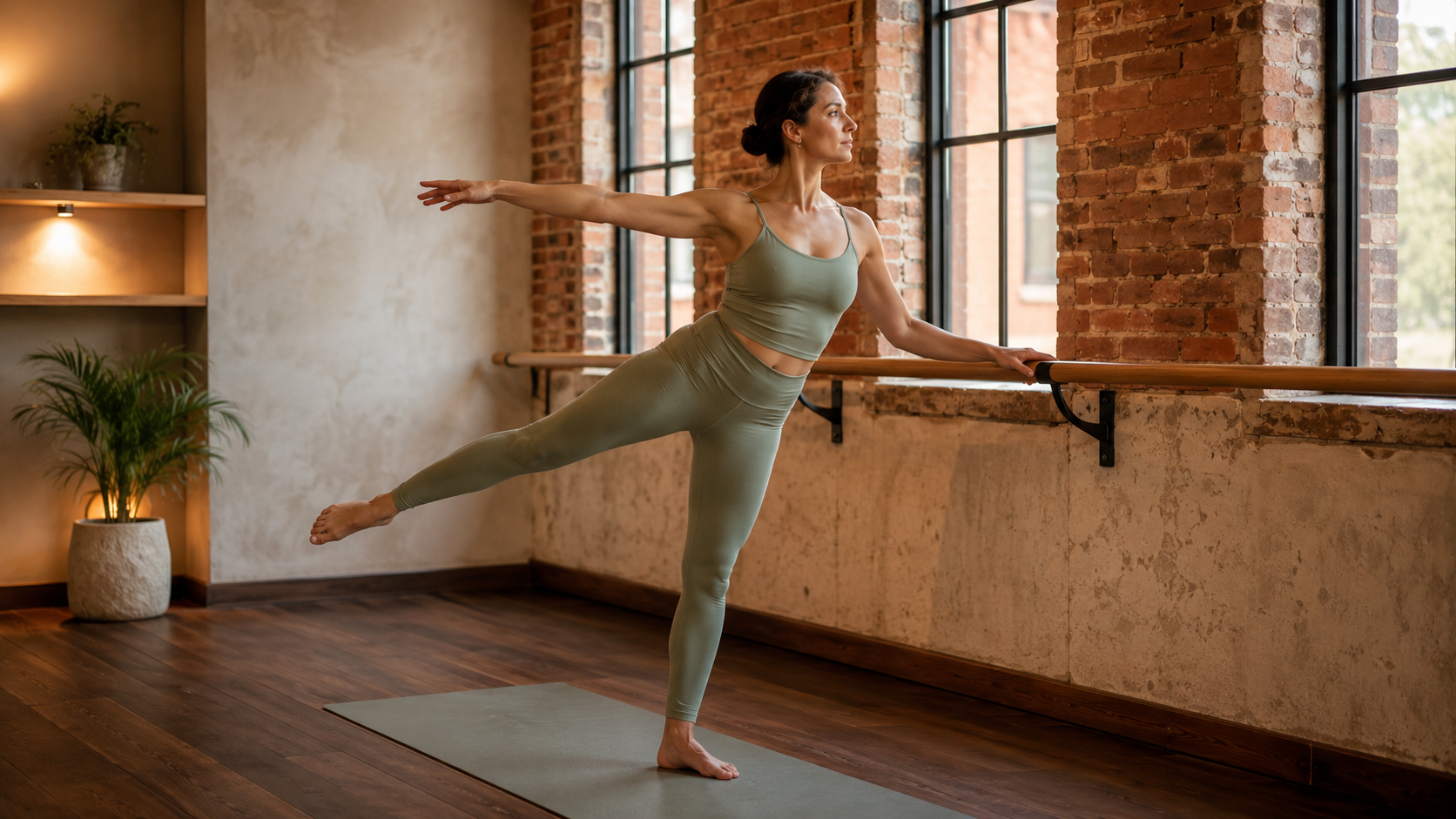
The name comes from the fixed handrail used for light support during standing work. A typical class also moves to the mat and may use small weights, resistance bands, balls or blocks. The movements can look small, but repeated controlled effort can make them surprisingly demanding.
This guide explains what Barre feels like, what to wear and how to pace your first session. When you are ready, visit the YogaLife Barre Fitness page or check the current timetable.
What is Barre Fitness?
Barre is a structured exercise class rather than a dance lesson. You may recognise ballet-inspired positions such as a turned-out stance or raised heels, but the aim is not to learn choreography for performance. The barre provides balance while you work through squats, lunges, leg lifts and calf raises with deliberate control.
Many classes alternate between full-range movements and shorter pulses or holds. These are used to maintain muscular effort, not to create a mythical “long and lean” body type. Exercise can improve strength and endurance, but it cannot selectively change the length of your muscles or dictate where your body loses fat.
Barre is usually low impact because jumping is limited or optional. Low impact does not mean low effort: thighs, calves, glutes, shoulders and trunk may work continuously. The exact challenge depends on the teacher, repetitions, resistance and your starting point.
Beginner mindset: small movements are not automatically easy, and a larger range is not automatically better. Choose a position you can control while breathing normally.
How is a Barre class structured?
Every teacher programmes differently, but most sessions follow a recognisable progression. The warm-up raises temperature and introduces positions used later. Standing work then targets the legs and balance, followed by upper-body or trunk exercises and a mat-based section. The session usually finishes by reducing the pace and allowing breathing to settle.
1. Warm-up
Simple rhythmic movement, spinal mobility and light squats prepare the body and introduce the class tempo.
2. Barre work
Supported squats, lunges, calf raises and leg lifts challenge the lower body through repeated controlled work.
3. Strength section
Small hand weights, bands or body weight may be used for shoulders, arms, back and trunk control.
4. Mat and finish
Floor-based exercises may target the trunk and hips before gentler movement and a short cool-down.
Music often helps set the pace, but you do not have to move faster than you can control. A good teacher demonstrates alignment, explains equipment and gives alternatives before fatigue makes decisions harder.
Which muscles does Barre work?
Barre is a whole-body class, although many sessions place particular emphasis on the legs and hips. Squat and lunge variations involve the quadriceps, hamstrings and gluteal muscles. Calf raises challenge the lower legs, while standing balance asks the feet, ankles and hips to coordinate.
Upper-body work may include light dumbbells, pressing, rowing or arm raises. Plank and mat exercises can involve the shoulders, back and abdominal muscles. The trunk should support movement rather than being held rigidly throughout the class.
The NHS advises adults to include muscle-strengthening activities involving all major muscle groups on at least two days each week. Barre can contribute, but whether a particular class provides enough challenge for every muscle group depends on its content and your level. It can sit alongside walking, yoga, sport or progressive resistance training.
If you are comparing movement styles, read Yoga or Pilates for strength and flexibility and the guide to planning a balanced weekly routine.
What does your first Barre class feel like?
The vocabulary may be unfamiliar at first. Terms such as “neutral spine”, “soft knees”, “pulse” or “tuck” should be demonstrated rather than assumed. Watch the teacher, start with the simplest option and allow several classes for the structure to become familiar.
You may feel local muscular fatigue or shaking, particularly in the thighs. Shaking can happen when muscles tire, but it is not a badge of success. Reduce the range, release the weights or take a pause if position and breathing become difficult to maintain.
Balance may also feel less steady than expected. Use the barre as support without gripping it or hanging backwards. Your goal is controlled participation, not matching the person beside you.
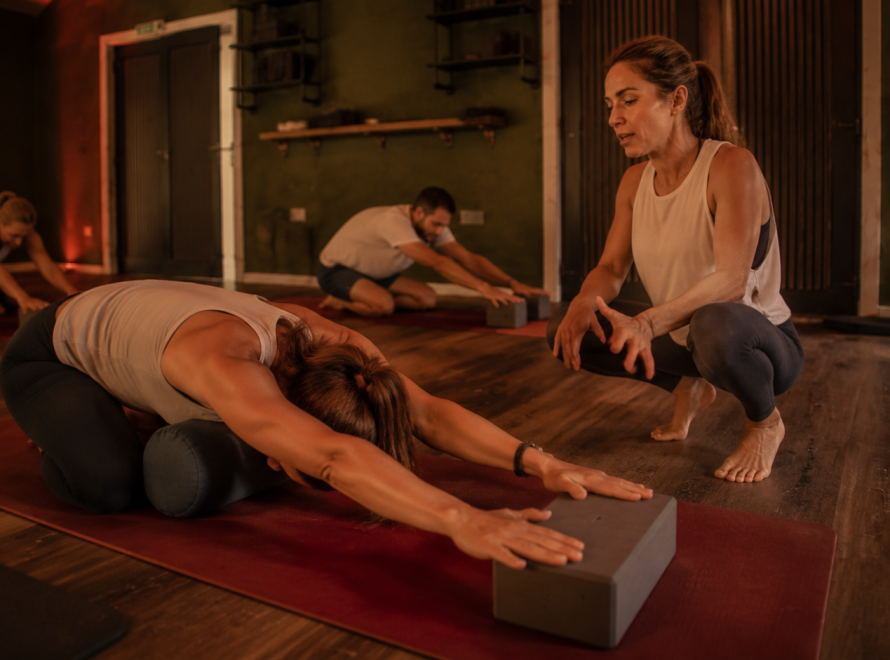
Tell the teacher that it is your first session and mention relevant injury, pregnancy, surgery or health conditions. Arrive ten minutes early so there is time to arrange equipment and ask questions. YogaLife’s new-member guidance covers the practical details of visiting the studio.
What should you wear and bring?
- Comfortable fitted clothing: choose leggings, shorts or trousers that allow squats and leg lifts. A closer fit can make it easier for the teacher to see alignment, but comfort comes first.
- Supportive top: wear something that stays in place as you bend and move between standing and floor exercises.
- Socks or bare feet: check the studio policy. Grippy socks can add traction, but ordinary slippery socks may make standing work less secure.
- Water: bring a bottle and drink according to thirst, particularly if the room is warm.
- No ballet shoes required: Barre Fitness is not a ballet class. Specialist footwear and dancewear are unnecessary.
Equipment is normally supplied, but confirm before travelling. Remove jewellery that catches and tie long hair back if that helps you move comfortably.
Useful beginner modifications
| If this feels difficult | Try this adjustment | What to preserve |
|---|---|---|
| Balance | Keep one or both hands lightly on the barre and reduce leg height. | A steady supporting foot and relaxed breathing. |
| Deep squat or plié | Use a smaller bend and keep heels down. | Knees tracking comfortably with the feet. |
| Calf raises | Lift both heels a smaller distance or alternate sides. | Controlled ascent and descent without rolling the ankles. |
| Upper-body fatigue | Use lighter weights, no weights or fewer repetitions. | Comfortable neck and controlled shoulder movement. |
| Floor work | Use padding, change position or perform a standing alternative. | No sharp pressure through knees, wrists or hips. |
| Fast transitions | Move at your own pace and join the next exercise when ready. | Safe position changes without rushing. |
Modification is part of good training. Avoid pushing through sharp pain, numbness, dizziness or joint instability. If you have osteoporosis, significant balance concerns, an acute injury or symptoms that have not been assessed, obtain appropriate professional advice before starting.
Soreness and recovery after Barre
Unfamiliar repeated movements can cause delayed-onset muscle soreness, commonly felt one to three days after exercise. Mild soreness usually settles, but it is not required for progress. More pain does not mean a more effective class.
Start with one class a week if you are returning to exercise or combining Barre with other demanding training. If recovery feels comfortable, you might build to two sessions on non-consecutive days. Eat normally, stay hydrated, sleep adequately and use gentle everyday movement rather than forcing intense stretches.
Sharp pain during class, marked swelling, loss of function, worsening symptoms or soreness that persists beyond what you would expect needs attention. Stop the aggravating activity and seek suitable healthcare advice.
Frequently asked questions
Do you need to be flexible for Barre?
No. Flexibility is not an entry requirement. Movements should be adjusted to your current range, and high leg positions are unnecessary.
Is Barre suitable if you have never danced?
Yes. Barre Fitness uses some ballet-inspired positions, but it is taught as an exercise class. You are not expected to know choreography or dance terminology.
Is Barre cardio or strength training?
It is primarily a muscular endurance and strength-focused class, although continuous movement may raise your heart rate. The balance varies between teachers and formats.
Will Barre make you bulky?
A group Barre class is unlikely to create large increases in muscle size by itself. Body composition depends on training, nutrition, genetics and time. “Bulky” is also subjective rather than a useful fitness measure.
Can you do Barre while pregnant?
Some people continue modified exercise during pregnancy, but individual suitability varies. Speak to an appropriate healthcare professional and tell the teacher before class so movements can be adapted.
Continue exploring YogaLife
Further reading
- NHS: How to improve strength and flexibility
- NHS: Physical activity guidelines for adults
- Leicestershire Partnership NHS Trust: Muscle soreness and exercise
Important: This article provides general information and is not medical advice. Work within your own limits and seek professional guidance when a health condition, injury, pregnancy or persistent symptom may affect participation.
SMALL MOVEMENTS. SERIOUS CONTROL.
Try Barre Fitness at YogaLife
Check the latest timetable and choose a session that fits your experience and week.