
Red Light Therapy and Yoga: How They Fit Into a Recovery Routine
Red light therapy and yoga can sit comfortably within the same wellness routine, but they perform different roles. Yoga provides movement, breathing and focused rest; red light therapy delivers a controlled dose of visible red or near-infrared light. Neither needs to be presented as a miracle treatment for the combination to feel worthwhile.
Recovery trends often arrive with confident claims about inflammation, cellular energy, pain, sleep and athletic performance. Some applications of photobiomodulation have been studied, but findings from a particular device, dose or clinical condition cannot automatically be applied to every full-body red light session.
This guide explains what red light therapy is, what the current exercise-recovery evidence can and cannot tell us, whether to use it before or after yoga and how to build a simple routine without allowing recovery treatments to replace the fundamentals.
What red light therapy is
Red light therapy is a broad consumer term for exposing the body to selected wavelengths of red or near-infrared light. In research and healthcare contexts, it is commonly called photobiomodulation or low-level light therapy.
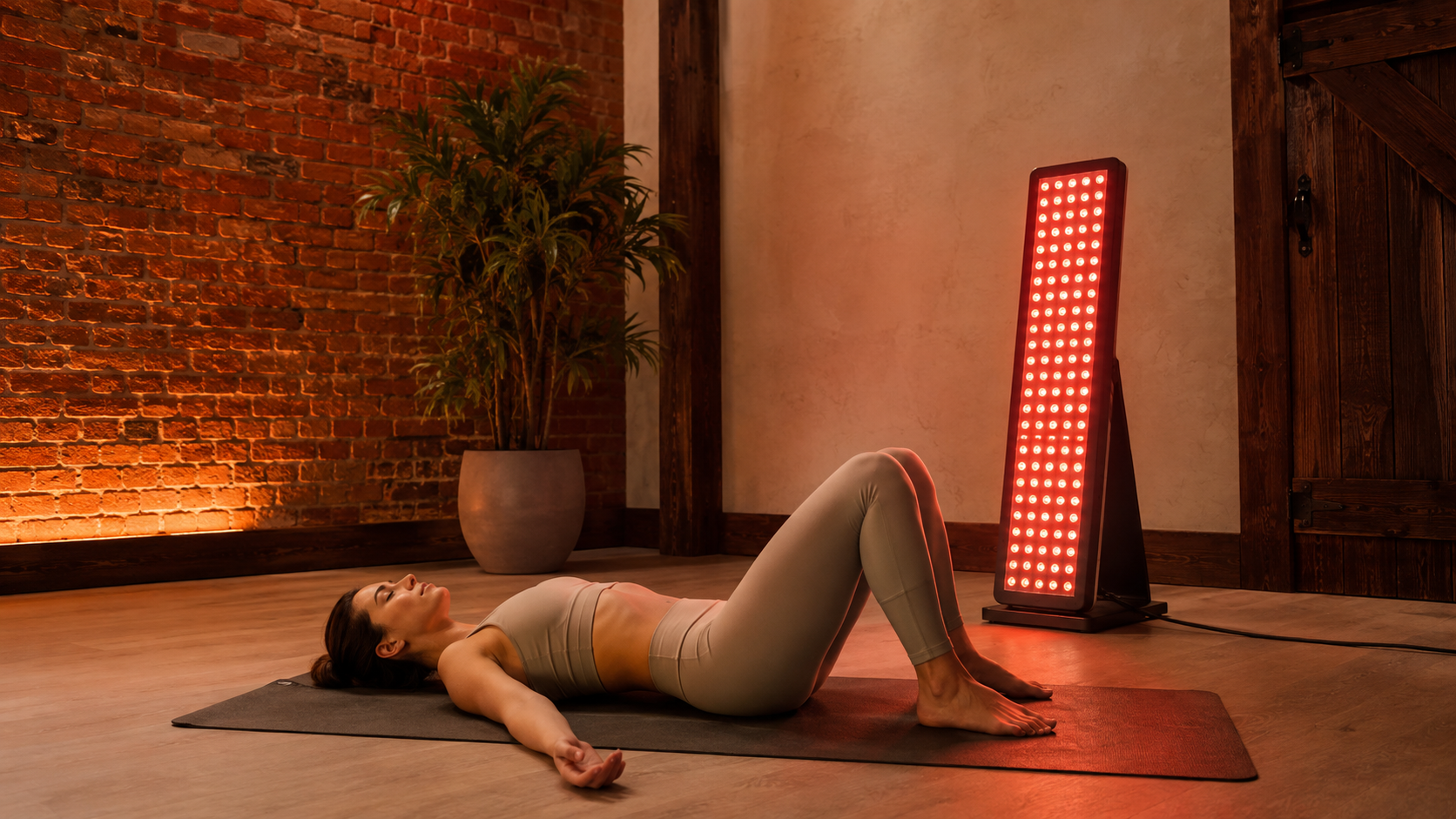
Devices can include small handheld units, face masks, targeted panels and larger beds or full-body systems. Some use light-emitting diodes, while others use lasers. They are not interchangeable simply because they produce a red glow.
The US Food and Drug Administration’s technical guidance describes photobiomodulation as applying light at an intensity intended to alter biological activity without deliberately heating tissue. It also notes that outcomes depend on variables including wavelength, irradiance, total dose, treatment area, distance, pulse settings and exposure time.
Those details matter. Two red light devices can look similar while delivering very different doses. A result reported for a targeted clinical laser cannot be assumed to apply to a general wellness panel used across the whole body.
It is not ultraviolet tanning
Red and near-infrared wavelengths are different from ultraviolet light. A photobiomodulation session is not supposed to tan the skin in the way that a sunbed does. It should also not be confused with an infrared sauna, where heating and sweating are central parts of the experience.
Some red light panels create mild warmth because of their electrical output or the surrounding environment. However, strong heat should not be treated as evidence that the light is working more effectively.
Check the actual service: “Red light therapy” can describe several technologies. Before booking, ask what equipment is used, whether the session is full-body or targeted, how distance and duration are controlled and whether protective eyewear is required.
What does the evidence show?
Photobiomodulation has been investigated for a wide range of purposes. The evidence is not one single body of research proving that every red light treatment produces the same result. Studies use different devices, wavelengths, doses, treatment schedules and participant groups.
Some research into targeted photobiomodulation has explored muscle performance, exercise-induced soreness and recovery. There are positive findings in parts of this literature, particularly when specific doses are applied to particular muscles. Other trials have not found meaningful changes.
The distinction between local and whole-body treatment is especially important for someone combining red light therapy with yoga.
Whole-body recovery evidence remains limited
A 2025 systematic review of whole-body photobiomodulation identified only five eligible studies involving 105 physically active participants. None of those studies found a benefit for exercise-performance or fatigue biomarkers.
Two of the included studies reported possible sleep-related improvements, but the review concluded that further research is needed. A small evidence base with different exercise protocols should not be turned into a guarantee that a full-body red light session will accelerate yoga recovery.
Targeted treatment is not the same as a wellness session
A clinician treating a defined area with measured equipment is answering a different question from a studio offering a general full-body recovery session. The dose reaching a muscle depends on the device, distance, skin exposure and treatment area.
This does not make a wellness session pointless. It simply sets an honest boundary around the claims. You may value the quiet time, comfortable environment and sense of routine even when a specific physiological result cannot be promised.
No instant cure for pain or injury
Red light therapy should not be used to self-diagnose or conceal pain. Persistent, severe, unexplained or worsening pain needs an appropriate assessment. A recovery session cannot confirm whether discomfort comes from ordinary muscular effort, an injury or another health condition.
Similarly, red light therapy should not replace sleep, sufficient food, hydration, suitable training or a rehabilitation plan. Those remain the core elements of recovery.
Red light therapy before or after yoga?
There is no established yoga-specific rule stating that red light therapy must happen before or after class. The better option depends on your schedule, the type of yoga, the equipment and how you feel during and after the light session.
Before yoga
A pre-class session can provide a quiet transition into practice. Research involving targeted photobiomodulation has sometimes applied treatment before exercise, but this does not establish an ideal protocol for yoga.
Leave enough time to put away protective eyewear, adjust to normal room lighting, drink if needed and complete the class warm-up.
After yoga
A post-class session may fit naturally into a slower recovery routine. Allow your breathing and heart rate to settle first, particularly after Power, heated or high-intensity yoga.
Red light therapy does not need to begin immediately after the final pose to be worthwhile.
Before a gentle or restorative class
If the session is comfortable and does not leave you hot, dizzy or visually unsettled, using red light therapy before gentle yoga may feel like an extended arrival period. You should still complete the movement preparation included by the teacher.
Do not use light exposure as a replacement for warming up. Even if a panel creates warmth at the skin, that is not the same as progressively preparing joints, muscles and balance for movement.
After a strong or heated class
After hot yoga, Power Yoga or another demanding session, prioritise the normal cool-down. Sit or stand gradually, allow breathing to settle and replace fluids according to thirst and the studio’s guidance.
If you feel faint, nauseous, unusually weak, unwell or excessively hot, do not add another wellness treatment. Tell a member of staff and move to a comfortable environment.
Consistency matters more than perfect timing
For a general wellness routine, choosing a time you can repeat safely is more practical than searching for a precise post-yoga window. If you use red light therapy, follow the device protocol consistently before deciding whether it contributes anything meaningful.
Changing the duration, distance, yoga style and training load at the same time makes it difficult to judge what is actually helping.
A sample yoga and red light routine
A recovery plan should fit around your life rather than create another demanding schedule. Start with one simple combination and assess it over several weeks.
Example post-yoga routine
- Choose an appropriate class. Match the style and intensity to your current energy, mobility and training goals.
- Complete the full cool-down. Do not leave before the settling phase simply to reach the recovery equipment.
- Check how you feel. Make sure you are alert, comfortable and not dizzy, nauseous or unwell.
- Prepare for the light session. Follow staff instructions on clothing, skin exposure, distance and eye protection.
- Use the set studio protocol. Do not extend the session or move closer to the device in pursuit of a stronger effect.
- Finish normally. Dress, take fluids if wanted and continue with your usual meal, rest and sleep routine.
- Review the outcome. Notice comfort, soreness, sleep and general energy rather than relying on the intensity of the experience.
One yoga class followed by an appropriately managed light session may be enough when you are testing the combination. There is no need to build every available treatment into the same day.
On non-yoga days
You can also keep red light therapy separate from yoga. This may be more convenient and can help you distinguish the effect of the light session from the effect of movement, relaxation or heat.
If your week includes resistance training, running or team sport, look at the overall workload rather than treating each activity in isolation. Recovery services cannot compensate for repeatedly training beyond your current capacity.
Track practical outcomes
You do not need a complicated spreadsheet. For two to four weeks, note whether you slept normally, how sore you felt the following day, whether you enjoyed the routine and whether it made your week easier or harder to manage.
These observations cannot prove a medical effect, but they are more useful than assuming that visible red light must be producing a significant benefit.
Red light therapy safety
The safety requirements depend on the device. A studio should have clear instructions covering who can use the equipment, the correct distance, session duration, protective eyewear, cleaning and what to do if discomfort develops.
Do not copy settings from a different brand of panel or an online routine. More exposure is not automatically better, and changing both distance and duration can substantially alter the delivered dose.
Protect your eyes
Do not stare directly into a bright panel. Use the protective eyewear supplied or recommended for that equipment and follow staff instructions even if another device you have used did not require glasses.
The FDA’s photobiomodulation device guidance specifically identifies eye safety and suitable safety glasses as matters that manufacturers should address. Closing your eyes is not automatically a substitute for the device’s required protection.
Ask for advice before participating
Speak to an appropriate healthcare professional before using red light therapy if you have a condition that makes you sensitive to light, an eye disorder, reduced skin sensation, a history of light-triggered symptoms or a skin condition being actively treated.
You should also check whether any prescription medicine, non-prescription treatment or topical product you use can increase photosensitivity. Do not stop prescribed medication simply to take part in a wellness treatment.
Pregnancy, active cancer treatment, a known or suspected cancerous lesion, recent surgery or another significant medical condition should be discussed with the relevant healthcare team first. Recommendations can differ according to the device and intended treatment area.
Stop if something feels wrong
End the session and tell a member of staff if you develop eye discomfort, a headache, skin pain, unexpected burning, marked redness, dizziness, nausea or another unusual symptom. Do not remain in the session because a timer has not finished.
Red light should not mean uncontrolled heat. Tell staff if the device or your skin feels excessively hot. Avoid placing liquids near electrical equipment and do not alter, touch or reposition studio panels without permission.
Realistic expectations
The most credible way to include red light therapy in a recovery routine is to treat it as optional support. It may be a comfortable addition to your week, but it should not be sold as proof that your body has healed, detoxified or completed recovery.
What you might reasonably notice
You may find the session calming, enjoy having uninterrupted rest or feel that it fits well after yoga. Some people report changes in soreness, sleep or general comfort. These individual experiences are valid, but they do not guarantee the same outcome for everyone.
What should make you cautious
Be wary of providers claiming that one general protocol can treat unrelated conditions, replace medical care, rapidly heal injuries or deliver permanent results. Claims should match the particular device, treatment area and evidence—not simply use the phrase “clinically proven”.
A responsible studio should be comfortable explaining what it offers without promising a cure. It should also allow you to decline or shorten a session without pressure.
When the simplest option is enough
After many yoga classes, your recovery needs may be straightforward: drink according to thirst, eat normally, sleep well and allow time before another demanding session. A shower, comfortable clothing and a gentle walk may be entirely sufficient.
Adding red light therapy makes sense when it is safe, affordable, enjoyable and manageable. It makes less sense when it creates anxiety, financial pressure or unrealistic expectations.
Frequently asked questions
Can red light therapy warm up muscles before yoga?
A panel may make the skin feel mildly warm, but that does not replace a progressive physical warm-up. Follow the teacher’s preparation and use easier variations until movement feels comfortable.
Is red light therapy the same as an infrared sauna?
No. Photobiomodulation uses selected light wavelengths and is generally intended to work without deliberately heating tissue. An infrared sauna is designed primarily to produce heat and sweating. Facilities sometimes offer both, so check exactly what you are booking.
Do I need red light therapy after every yoga class?
No. There is no evidence-based requirement to use it after every class. Start conservatively and review whether the routine adds enough value to justify the time and cost.
How long should a session last?
Use the protocol for the specific device. Suitable duration depends on its output, your distance from it, treatment area and intended use. Do not assume that a longer session produces a better result.
Can it treat a yoga injury?
Do not use a general wellness session to diagnose or independently treat an injury. New, severe, persistent or worsening pain should be assessed by an appropriate healthcare professional.
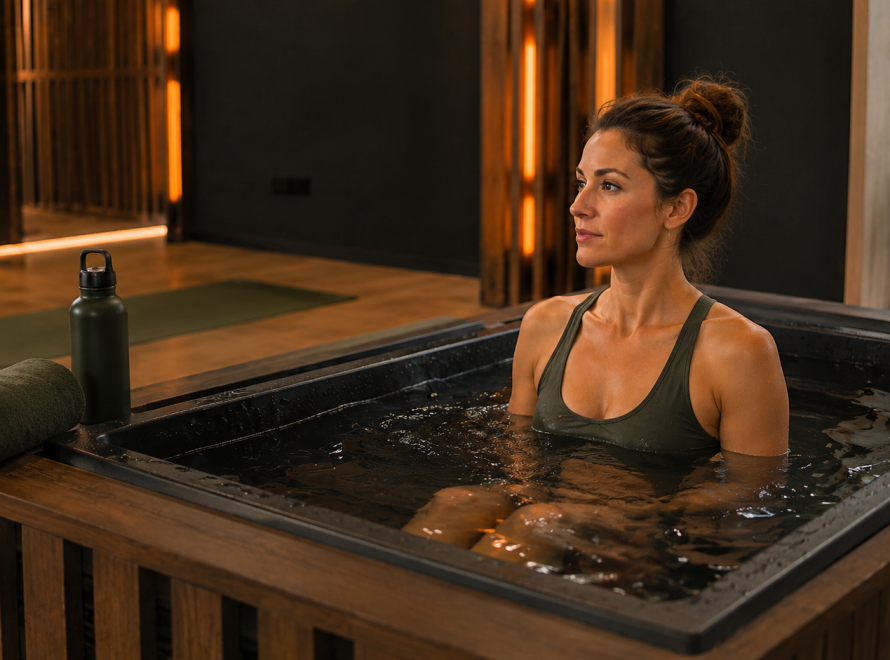
Can I combine it with a cold plunge?
Possibly, but there is rarely a need to stack several recovery treatments immediately after yoga. Each service has separate precautions. Introduce one element at a time and follow the studio’s safety process.
Making the right choice
Red light therapy and yoga can form a calm, repeatable recovery routine when both are used appropriately. Yoga remains the movement practice; the light session is an optional addition rather than a shortcut around training, rest or healthcare.
Before booking, check the equipment, session format, supervision and safety instructions. Then judge the routine by practical outcomes: whether it is comfortable, whether it fits your week and whether you feel able to continue your normal activities afterwards.
Related YogaLife guides
Sources and further reading
- US Food and Drug Administration: Photobiomodulation device guidance
- Systematic review: Whole-body photobiomodulation for exercise performance and recovery
- Meta-analysis: Pre-exercise photobiomodulation, muscle endurance and recovery
- Systematic review: Photobiomodulation, pain and return to play in injured athletes
Important: This article provides general information and is not medical advice. Red light therapy is not suitable for everyone or every condition. Seek professional guidance when pregnancy, medication, eye or skin sensitivity, cancer treatment, an injury or another health condition may affect participation.
Your next step
Build a recovery routine that fits your week
Explore YogaLife’s wellness classes and contact the team if you would like information about the available recovery facilities, session format or safety guidance.
Explore wellness classes