
Cold Plunge After Yoga: Benefits, Timing and Safety Considerations
A cold plunge after yoga can feel refreshing, but it is not an essential part of recovery—and colder or longer is not automatically better. The right decision depends on the type of yoga you have practised, how your body feels, your health and the way the session is supervised.
Cold-water immersion has become a familiar feature of modern recovery routines. It is often paired with strength training, running, sauna sessions and increasingly yoga. Social media can make the transition from a hot studio to an icy plunge look simple, yet sudden cold exposure creates a real cardiovascular and breathing response.
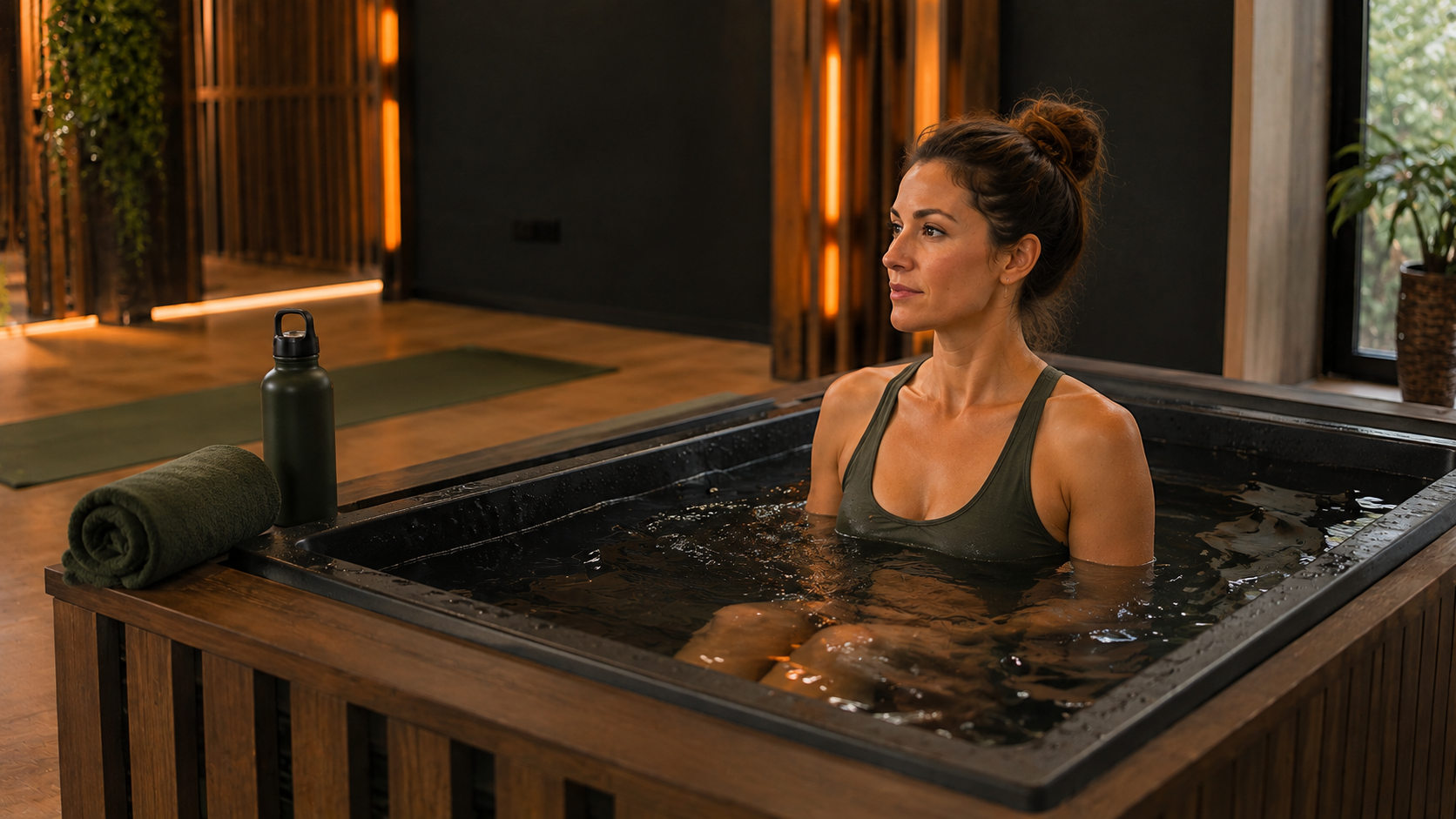
This guide explains what cold immersion may offer, when it could interfere with your goals and how to approach it more safely. It is not a prescription for a particular temperature or duration. A controlled studio plunge should always follow the facility’s guidance and any advice you have received from a healthcare professional.
Cold exposure basics
A cold plunge usually involves immersing part of the body in cool or cold water for a limited period. The water draws heat from the body much more quickly than cool air. Blood vessels near the skin narrow, heart rate and blood pressure can rise, and the first contact may trigger a gasp followed by rapid or difficult-to-control breathing.
The RNLI describes water at 15°C and below as cold and warns that sudden exposure can seriously affect breathing and movement. Its advice is written primarily for open water, where drowning and environmental hazards add further risk. A supervised plunge pool is a more controlled setting, but it does not remove the body’s initial response to cold.
That response is one reason a plunge should not be treated as a test of toughness. Breath-holding contests, forced immersion and encouragement to remain in after losing control are not signs of a high-quality recovery session.
A useful distinction: feeling cold is expected. Chest pain, faintness, confusion, uncontrolled breathing, pronounced numbness or feeling unable to leave safely are not outcomes to push through.
Yoga can influence how the transition feels. After a gentle class you may be calm and physically comfortable. After hot yoga or a strong flow you may still be warm, sweaty, dehydrated or light-headed. Moving immediately from that state into very cold water adds another significant demand before your body has settled.
What are the possible benefits?
Research into cold-water immersion has focused much more on demanding exercise than on yoga. Some people report reduced feelings of muscle soreness, greater alertness or a subjective sense of recovery after strenuous training. These effects do not prove that a cold plunge improves every form of exercise recovery, and they should not be presented as yoga-specific benefits.
A systematic review of cold-water immersion and physical performance recovery found that outcomes vary according to the exercise, recovery period and immersion protocol. In practical terms, cold immersion may feel helpful in some situations without being the best choice after every session.
Perceived soreness
Cold immersion may temporarily change how soreness or fatigue feels after hard exercise. That can be useful when someone has another sporting commitment soon. It does not necessarily mean that the underlying tissues have recovered more quickly, and it should not be used to mask pain that needs assessment.
Most yoga classes do not create the same recovery demands as a hard running event or repeated high-intensity training. After a restorative, Yin or beginner session, food, fluids, sleep and ordinary gentle movement may be all the recovery support you need.
Alertness and mood
Some people enjoy the immediate alert feeling that follows cold exposure. Others find it unpleasant or overstimulating. These experiences are personal and should not be converted into promises that cold water will “reset” the nervous system, cure anxiety or create lasting mental-health improvements.
Claims to treat cautiously
Be wary of claims that a brief plunge will detoxify the body, guarantee weight loss, prevent illness or dramatically accelerate healing. Cold immersion is a physical stressor, not a cure-all. Its value should be judged by how it fits your goals and how safely you can use it—not by the intensity of the experience.
Cold plunge before or after yoga?
Before yoga
Cold exposure can temporarily leave the skin and limbs feeling numb, tight or less coordinated. That is not an ideal starting point for balance work, deeper mobility or fast transitions.
If you plunge first, allow yourself to dry, rewarm and complete a gradual yoga warm-up before attempting demanding positions.
After yoga
Wait until your breathing and heart rate feel settled. After a hot or strenuous class, cool down gradually and replace fluids before deciding whether to plunge.
Do not enter simply because it is included in a routine. Skip it if you feel dizzy, unusually tired, unwell or unable to control your breathing comfortably.
For most people who choose to combine the two, a carefully supervised plunge after yoga is more logical than becoming cold immediately before movement. However, there is no universal rule that it must happen the moment class finishes.
After hot yoga
A rapid move from a heated studio into cold water can feel dramatic. That contrast is sometimes marketed as the main attraction, but an intense sensation is not evidence of a better recovery effect.
Finish the class, allow your breathing to settle and drink according to your thirst and the studio’s guidance. If you remain light-headed, nauseous, unusually weak or overheated, do not plunge. Move to a comfortable environment and tell a member of staff.
After strength-focused yoga
If your practice includes strength training—or you lift weights alongside yoga—timing may deserve additional thought. A meta-analysis of post-exercise cold-water immersion found a small attenuation of muscular-strength gains overall, although the evidence was limited and involved predominantly male participants. Whole-body immersion did not show a statistically significant difference in the subgroup analysis.
This does not mean an occasional plunge will undo your progress. It means that regularly placing cold immersion immediately after resistance work may not suit someone whose main goal is long-term strength adaptation. A coach or qualified professional can help you separate recovery sessions from key training when appropriate.
Duration and temperature
There is no single temperature and time combination that is safe or necessary for everyone. Risk depends on the temperature, immersion depth, exposure time, your body size, previous cold experience, health, fatigue and what you did immediately beforehand.
Online challenges often reward progressively colder water and longer sessions. That is a poor way to judge quality. A sensible first experience should be conservative, supervised and easy to end. Use the facility’s established protocol rather than copying an influencer or changing the controls yourself.
- Check the displayed water temperature before entering.
- Use a milder setting and brief exposure when you are new.
- Enter steadily while holding the provided support.
- Keep your face and head out of the water unless a qualified professional has given different guidance.
- Maintain normal breathing; do not hyperventilate or perform breath holds.
- Leave while you are still alert, coordinated and able to breathe normally.
The timer is a maximum boundary, not a target you must endure. If your body gives you a reason to leave earlier, leaving is the correct response.
Who should take extra care?
Cold exposure places an immediate demand on the cardiovascular and respiratory systems. Seek medical advice before taking part if you have a diagnosed condition—or symptoms under investigation—that may be affected by sudden cold.
That includes people with heart or circulation disease, heart-rhythm problems, uncontrolled blood pressure, Raynaud’s phenomenon, cold urticaria, reduced sensation or neuropathy, a history of fainting or seizures, or a previous severe reaction to cold.
Advice may also be needed during pregnancy or the postnatal period, after recent treatment or surgery, when recovering from illness, or when taking medication that affects blood pressure, heart rate, alertness or temperature regulation. This is not an exhaustive list.
Never use a plunge while affected by alcohol or recreational drugs. Do not enter alone, even if you already consider yourself experienced. Staff should know that you are using the facility and there should be a clear, unobstructed way to exit.
Speak up before the session. Tell the studio team if you are new, have previously felt faint around heat or cold, or are uncertain whether a health condition is relevant. A good provider will treat this as useful safety information, not an inconvenience.
A safer studio routine
- Check suitability first. Read the facility rules and disclose relevant health information. Do not rely on a waiver as proof that the activity is suitable for you.
- Finish yoga properly. Complete the class cool-down. After a heated or demanding practice, allow your heart rate and breathing to settle.
- Check how you feel. Skip the plunge if you are dizzy, nauseous, unwell, very fatigued, dehydrated or unable to focus clearly.
- Prepare your exit. Place a towel, dry clothing and suitable footwear nearby. Make sure the floor and route out are clear.
- Enter under supervision. Move steadily, use the handrail and avoid jumping or diving. Keep your airway clear.
- Keep breathing naturally. An initial gasp can occur. Do not add deliberate hyperventilation, competitive breath holding or underwater challenges.
- Leave at the first warning sign. Exit for chest pain, faintness, confusion, severe numbness, unusual breathlessness or breathing that will not settle.
- Dry and rewarm gradually. Put on dry layers and move somewhere sheltered. Do not drive until you feel fully alert, warm and steady.
Recovery should leave you better able to continue your day. If the plunge repeatedly produces headaches, prolonged shivering, dizziness, disrupted sleep or unusual fatigue, stop using it and seek appropriate advice.
Cold plunge after yoga: frequently asked questions
How long should I wait after yoga?
There is no evidence-based waiting period that suits everyone. At minimum, wait until your breathing and heart rate have settled and you can stand and walk without dizziness. After hot yoga, allow additional time to cool gradually and take fluids. If you still feel overheated, weak or unwell, skip the plunge.
Is a cold plunge better than a normal shower?
Not necessarily. A comfortable shower, change of clothing, food, fluids and sleep may be entirely adequate after yoga. Choose a plunge because you enjoy it and can use it safely—not because ordinary recovery has been presented as insufficient.
Will it reduce muscle soreness?
Cold-water immersion may reduce perceived soreness after some demanding exercise, but results vary and the research is not specific to ordinary yoga classes. New, sharp, persistent or worsening pain should not be numbed and ignored.
Should I plunge after every class?
No. More frequent exposure is not automatically more beneficial. Consider the class intensity, your goals and how you respond. If strength development is a priority, regularly plunging immediately after resistance-based training may not be the most helpful timing.
Can beginners use a cold plunge?
A beginner may be able to use a professionally managed plunge if it is appropriate for their health and the session is supervised. Start conservatively, understand how to exit and never stay in to match another person’s time.
When to get medical help
Leave the water immediately and alert staff if you develop chest pain, feel faint or confused, cannot control your breathing, lose coordination or experience severe numbness. Call 999 for a medical emergency.
According to the NHS guidance on hypothermia, warning signs can include shivering, pale or cold skin, blue or grey lips or skin, slurred speech, slow breathing, tiredness and confusion. Hypothermia is a medical emergency. Call 999 or go to A&E if it is suspected; do not drive yourself.
While waiting for help, move the person into shelter, remove wet clothing and wrap them in dry towels or blankets. Stay with them. The NHS advises against trying to rewarm someone with a hot bath, heat lamp or direct hot-water bottle.
Making the right choice for your routine
A cold plunge can be an optional part of a broader wellness routine, but it does not validate the yoga session that came before it. The foundations of recovery remain appropriate training, enough rest, adequate food and fluids, and professional support when pain or health concerns require it.
If you enjoy cold immersion, use it deliberately. Choose a supervised setting, avoid competitive protocols and review whether it genuinely helps you feel and function better. If it consistently makes you feel depleted or anxious, there is no wellbeing prize for continuing.
Related YogaLife guides
Sources and further reading
Important: This article provides general information and is not medical advice. Cold-water immersion is not suitable for everyone. Seek professional guidance when a health condition, pregnancy, medication, recent treatment or unexplained symptom may affect participation.
Your next step
Build a safer recovery routine
Explore YogaLife’s wellness classes and speak to the team if you have questions about facilities, supervision or choosing a session that suits your experience.
Explore wellness classes