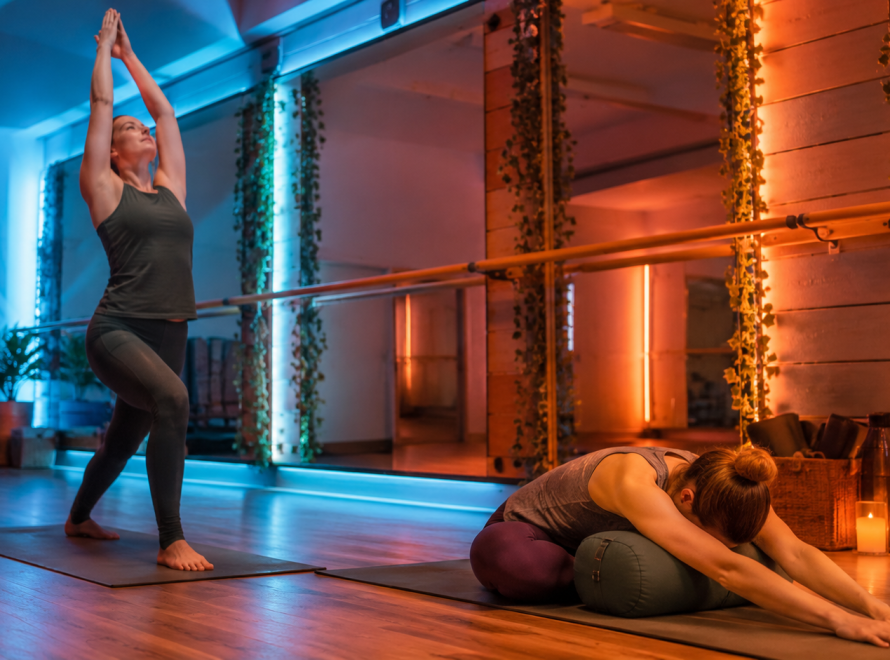

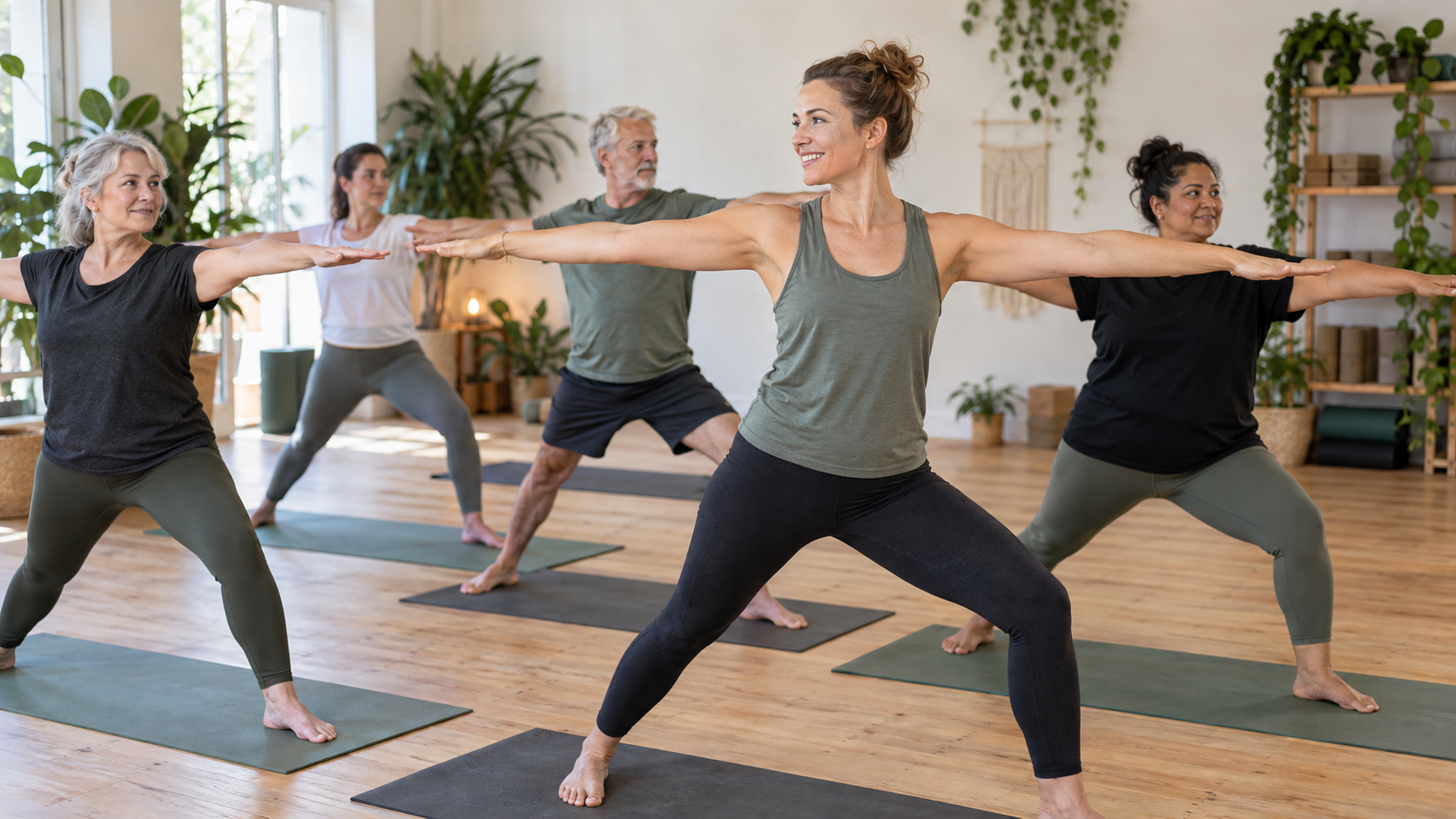
A Beginner’s 30-Day Yoga Challenge: Build a Sustainable Practice
YogaLife Journal
Beginner yoga challenge · Habit building · Updated September 2026
A useful 30-day yoga challenge is not 30 hard workouts. It is 30 days of returning to the practice through classes, short home sessions, breathing, mobility, rest and reflection.
The goal is to build a routine you can continue when the challenge ends. For a beginner, that usually means two or three structured movement sessions each week, supported by brief low-pressure practices on other days.
This plan gives you flexibility. Move days around to fit work and family commitments, repeat sessions you enjoy and reduce the volume when your body needs more recovery.
Start with a goal you can measure
“Do more yoga” is difficult to plan. Choose a simple outcome that relates to your life: attend your first four studio classes, create a ten-minute morning routine, improve confidence with basic poses or use gentle evening practice to transition out of work mode.
A good goal focuses on behaviour rather than a dramatic physical result. Flexibility, strength and balance change gradually and do not improve at the same rate for everyone. Completing a particular pose by day 30 is not a reliable measure of success.
Useful challenge goals
- show up on planned days;
- learn five basic movements;
- try two suitable class styles;
- practise for ten minutes at home;
- notice which schedule feels sustainable.
Goals to avoid
- forcing a split or deep backbend;
- never missing a physical session;
- copying another person’s range;
- using soreness as proof of progress;
- doubling sessions to “catch up”.
Define a minimum practice. On a busy or low-energy day, five minutes of comfortable breathing, gentle mobility or quiet rest still counts. A small version protects the habit without turning the challenge into punishment.
How to complete the challenge safely
Start at your present level, not the level you hope to reach. Keep movements controlled, breathe without strain and use props or smaller variations. Rest whenever needed and allow recovery after demanding classes.
Tell your teacher if you are new, pregnant, returning after treatment or managing an injury or health condition. A teacher can provide general options within their training, but they cannot diagnose symptoms or decide whether exercise is medically appropriate for you.
Stop if you experience pain, dizziness, numbness, faintness, chest discomfort or unusual breathlessness. Seek appropriate professional guidance for persistent, severe or unexplained symptoms. Heat adds extra demand, so approach heated classes gradually and pay attention to hydration and how you feel.
The four weekly phases
Week 1: Arrive
Learn the basics and make starting easy. Attend one beginner-friendly class, complete two short home practices and use the other days for breathing, walking or rest.
Focus: familiarity, not intensity.
Week 2: Repeat
Repeat movements and class styles instead of chasing novelty. Aim for one or two classes and two short home sessions, with recovery between stronger days.
Focus: remembering what feels useful.
Week 3: Explore
Try one different class or adjust the time of day. Keep the rest of the week familiar so you can compare the new option without changing everything at once.
Focus: finding your best fit.
Week 4: Sustain
Practise the schedule you might genuinely keep next month. Reduce anything that feels excessive and choose your preferred class, home routine and recovery day.
Focus: life after the challenge.
Days 29 and 30 are for review. Repeat a favourite session, take an easy recovery practice and decide what will continue. The purpose is not to finish exhausted; it is to leave with a workable routine.
Balance studio classes with home practice
Studio classes provide structure, sequencing and access to a teacher. Home practice removes travel and can be as short as five or ten minutes. Combining both makes the challenge more realistic than expecting a full class every day.
| Day | Practice | Suggested duration | Purpose |
|---|---|---|---|
| Monday | Beginner-friendly studio class | Class length | Guidance and foundations |
| Tuesday | Breathing or gentle mobility | 5–10 minutes | Recovery and continuity |
| Wednesday | Home practice | 10–15 minutes | Repeat familiar movements |
| Thursday | Rest or easy walk | As needed | Physical recovery |
| Friday | Studio class or home flow | 15–60 minutes | Strength, mobility or calm |
| Saturday | Optional Yin or Restorative practice | 10–45 minutes | Slower movement and rest |
| Sunday | Reflection and comfortable breathing | 5 minutes | Review and plan |
At YogaLife, beginners can consider YogaLife Fundamentals, Aligned Hatha Yoga, Vinyasa Slow Flow, Yin Yoga or Restorative Yoga. Check the live timetable and ask the team which class best matches your experience and preferred intensity.
A simple ten-minute home practice
- One minute of comfortable, unforced breathing.
- Two minutes of gentle seated or standing mobility.
- Two minutes moving slowly between cat–cow or another familiar spinal movement.
- Two minutes using a basic standing sequence learned in class.
- Two minutes of a comfortable floor-based stretch.
- One minute resting and noticing how you feel.
Only repeat movements you understand and can perform comfortably. A short home practice should reinforce good learning from class, not become an attempt to teach yourself advanced poses from social media.
Recovery is part of the challenge
Muscles, connective tissues and your wider energy levels need time to respond to new activity. Consecutive demanding sessions may create more fatigue than progress, particularly if you are also running, strength training or doing a physical job.
Use lower-energy days for relaxed breathing, gentle mobility, a walk or complete rest. Sleep, regular meals and hydration influence how practice feels. You do not need a special detox, supplement or recovery gadget to complete the challenge.
Normal effort is not the same as a warning sign. Mild, short-lived muscle soreness can occur after unfamiliar movement. Sharp pain, joint pain, increasing symptoms or pain that changes daily activity needs a different response—stop and seek suitable advice.
Track the habit without becoming ruled by it
A simple tick on a calendar can make the routine visible. Add one short note about what you did and how it felt. Avoid tracking so many measurements that recording the practice takes longer than doing it.
Record
- practice type and duration;
- energy before and after;
- any discomfort or useful modification;
- sleep and recovery patterns;
- which class or time you enjoyed.
Review weekly
- What was easiest to repeat?
- Which day regularly failed?
- Did stronger sessions have recovery space?
- What felt enjoyable?
- What should change next week?
If you miss a day, continue with the next planned practice. Do not restart the challenge and do not add a punishing double session. The skill you are building is returning after disruption.
What comes after day 30?
Review what you actually completed rather than the schedule you intended to follow. If one weekly class and two ten-minute home practices worked, that is a strong foundation. You can maintain it for another month before adding more.
Choose a pass or membership from your real attendance. YogaLife’s 2‑4‑1 introductory offer provides two class credits for £13.50, both used within 14 days. The £55 Intro Unlimited Pass provides 30 days of eligible weekly classes and is better suited to people who can attend regularly. Both are intended for first-time customers and limited to one introductory purchase.
Your next goal might be consistency, learning a particular style or balancing yoga with other training. Keep it specific and modest enough to repeat.
Frequently asked questions
Do I need to practise physically every day?
No. Recovery, comfortable breathing and reflection days are deliberately included. Thirty consecutive hard sessions would be unsuitable for many beginners.
How long should a beginner practise?
Five to fifteen minutes is enough for many home days. Studio classes can be longer because a teacher structures the session and includes preparation and rest.
What if I miss several days?
Resume with an easy planned session. Do not restart or try to catch up. Adjust the remaining schedule if the original plan was unrealistic.
Can I combine yoga with the gym or running?
Yes, but count the total training load. Place demanding yoga away from your hardest workouts and use gentler practice when recovery is the priority.
Which YogaLife intro offer suits the challenge?
The 2‑4‑1 offer suits someone wanting two initial studio visits. Intro Unlimited better supports multiple weekly classes across a focused 30-day period. Check eligibility and current terms before buying.
Build your YogaLife challenge
Important: This guide provides general information and is not medical advice. Work within your own limits and seek professional guidance when a health condition, injury, pregnancy or persistent symptom may affect participation.
START SMALL. RETURN OFTEN.
Start your 30-day YogaLife routine
Compare the first-time offers, choose classes that fit your week and build a routine you will still want after day 30.