

Yoga Studio Etiquette: 15 Tips for Your First Visit
YogaLife Journal
First-class guide · Studio etiquette · Updated September 2026
Good yoga studio etiquette is mostly about helping everyone feel comfortable: arrive with enough time to settle, keep distractions outside the room, respect shared space and communicate clearly with the teacher.
You do not need to know yoga terminology, be flexible or understand every unwritten studio habit before your first class. A considerate attitude matters far more than looking experienced.
Studios differ, so treat this guide as a practical starting point and follow any instructions given by the YogaLife team. Here are 15 straightforward tips that will help your first visit run smoothly.
Arrival: give yourself time to settle
Book before you travel
Check the live timetable and reserve your place in advance. Confirm the studio location, class time, temperature and experience level rather than relying on an old screenshot or social post.
Arrive 10–15 minutes early
A slightly early arrival gives you time to find the entrance, check in, use the changing facilities and speak to the teacher. Turning up exactly as class begins can feel stressful for you and distracting for everyone already settled.
Tell reception that it is your first visit
There is no advantage in pretending you know the setup. The team can explain where to leave shoes, which room to use, what equipment is provided and whether there is anything specific to know about the session.
Running late? Do not rush into the room without checking. Some classes may close after they begin for safety and to protect the atmosphere. Contact the studio if possible and follow the teacher’s decision.
Phones, watches and distractions
Silence your phone completely
Use silent or do-not-disturb mode and turn off vibration if it can still be heard against a hard surface. Ideally, leave the phone with your belongings rather than beside the mat.
Disable noisy watch notifications
Smartwatch alerts can interrupt a quiet class as easily as a phone. Use theatre mode, do-not-disturb or remove the watch if it is likely to light up, vibrate or announce exercise milestones.
If you genuinely need to remain contactable—for example, because you are on call or responsible for someone—tell the teacher before class. They can help you choose a discreet position near the exit.
Shoes, clothing and personal belongings
Leave outdoor shoes in the designated area
Yoga rooms are generally barefoot spaces. Removing outdoor footwear helps keep floors and shared mats clean. Follow the studio’s layout rather than leaving shoes where they could block a doorway.
Wear clothing you can move in comfortably
You do not need specialist yoga clothing. Choose comfortable workout wear that stays secure when you bend, reach or move between the floor and standing. Bring a light layer for before and after class.
Keep bags and valuables out of the practice area
Use the storage space indicated by the studio. A clear floor reduces trip hazards and gives neighbouring students enough room to move without worrying about bottles, bags or keys.
Mats, equipment and shared space
Ask before choosing a mat position
The teacher may have a preferred layout for visibility, ventilation or class capacity. If you are new, a place with a clear view of the teacher can be useful, but you do not have to hide at the back.
Use equipment carefully
YogaLife provides mats and equipment, although you may bring your own mat. Take only the props you need, keep them within your space and return studio equipment neatly after class.
Respect the space around neighbouring mats
Check behind and beside you before extending an arm or leg. In a busy class, stagger your position when needed and adjust calmly if the teacher asks the group to create more space.
Bring with you
- comfortable workout clothing;
- a water bottle;
- a towel for heated or energetic classes;
- your own mat only if preferred;
- an open mind and questions.
Leave outside the room
- outdoor footwear;
- audible phone notifications;
- large bags and loose belongings;
- strong fragrances where possible;
- pressure to perform every pose.
Communicating with your teacher
Share relevant information before class
Tell the teacher privately if you are pregnant, returning after treatment, managing an injury or have a condition that may affect movement, balance, breathing or heat tolerance. They may offer options, but a group teacher cannot diagnose a problem or provide medical clearance.
Ask how physical adjustments are handled
Some teachers use verbal instruction only; others may offer hands-on guidance with consent. You can always decline touch. A clear “no thank you” is enough and should be respected without explanation.
Ask questions before or after class when possible. During practice, a short clarification is fine if you feel lost or unsafe. You are not interrupting by asking for a suitable alternative.
Modifications, rest and comparing yourself
Use modifications without apology
A block, strap, bent knee, smaller movement or rest is part of practice—not a lesser version of it. Choose the option that lets you breathe steadily and stay in control. Looking around for orientation is normal; competing with the person beside you is not useful.
You can pause in a comfortable position whenever needed. Stop if you feel pain, dizziness, numbness or unusual breathlessness. In a heated class, tell the teacher if you feel unwell and leave safely with their awareness rather than trying to push through.
Leaving the class considerately
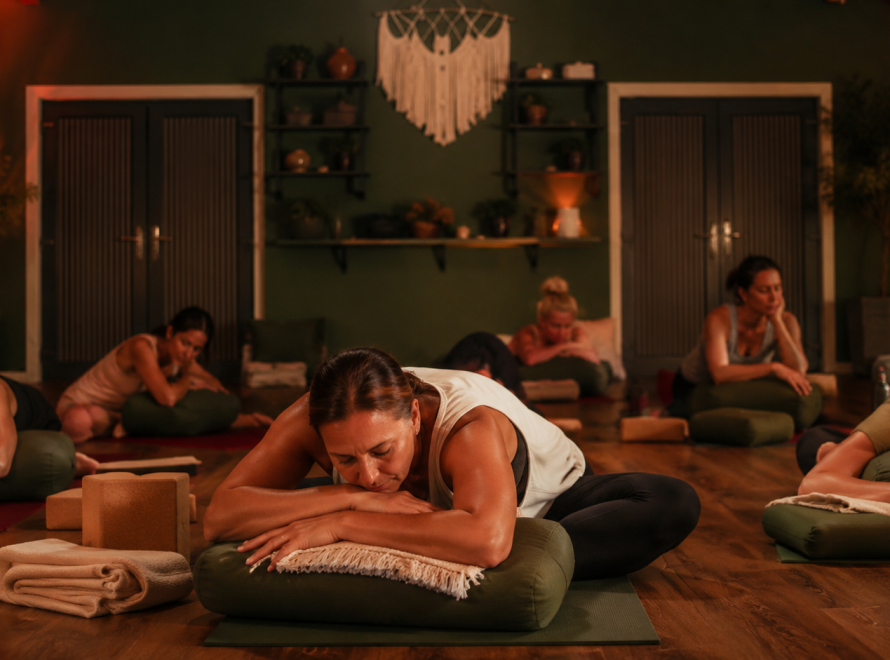
Stay for the closing rest when you can
The final rest is part of the class, not spare time added at the end. If you must leave early, tell the teacher beforehand, position yourself near the door and pack away quietly before the closing relaxation begins.
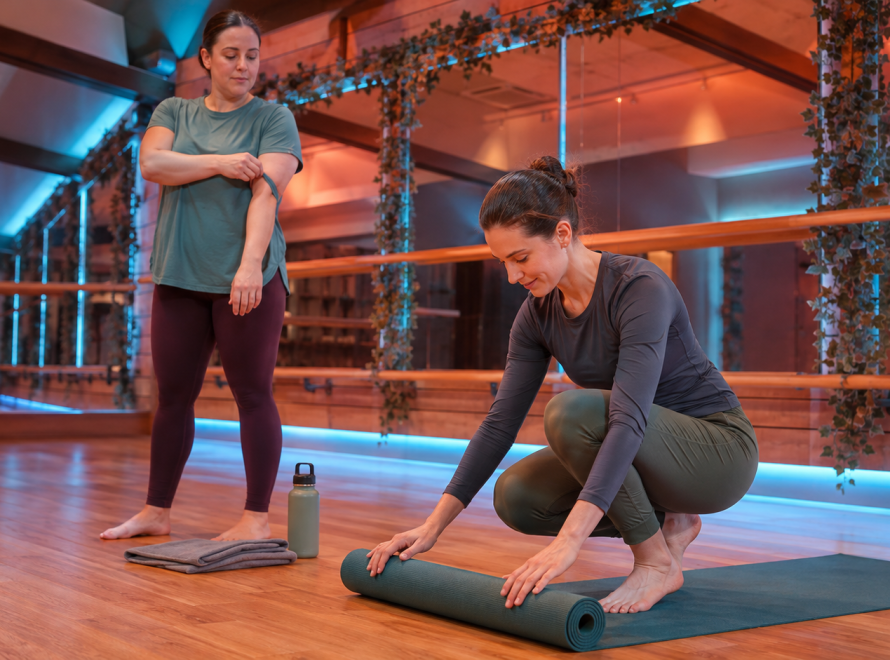
After class, return props to the correct place and wipe shared equipment if the studio asks you to. Take bottles and tissues with you, check that you have all personal belongings and keep conversation quiet until you are outside the practice room.
First-visit etiquette checklist
Before class
- reserve your place;
- check the class style and temperature;
- arrive 10–15 minutes early;
- wear comfortable clothing;
- bring water;
- tell the teacher you are new;
- share relevant health information.
Inside the studio
- remove outdoor shoes;
- silence phones and watches;
- keep belongings clear of mats;
- respect neighbouring space;
- use props and modifications;
- rest whenever needed;
- return equipment neatly;
- leave quietly if departing early.
Common first-visit questions
Do I need to bring a yoga mat?
No. YogaLife provides mats and equipment, although you are welcome to bring your own mat if you prefer.
Do I need to be flexible?
No. Flexibility is not an entry requirement. Work within your present range and use the options offered by the teacher.
Which class should a beginner choose?
YogaLife recommends Fundamentals as a clear introduction. Hatha, Yin, Restorative and some slower Flow classes may also suit beginners, depending on experience and goals.
What if I cannot do a pose?
Skip it, rest or ask for an alternative. A pose is never compulsory, and forcing a position is not good etiquette or good practice.
Can I leave during class?
Yes, particularly if you feel unwell. Let the teacher know where possible. If leaving for another reason, do so quietly and avoid interrupting the closing relaxation.
Prepare for your first YogaLife class
Important: This article provides general information and is not medical advice. Work within your own limits and seek professional guidance when a health condition, injury, pregnancy or persistent symptom may affect participation.
YOUR FIRST CLASS SHOULD FEEL WELCOMING.
Find your first YogaLife class
Choose a beginner-friendly session, arrive with time to settle and let the teacher know that you are new.