
What to Wear to Yoga: A Practical First-Class Guide
YogaLife Journal
First-class essentials · Wilmslow & Handforth · Updated September 2026
You do not need a matching yoga outfit or specialist brand for your first class. Wear clean, comfortable clothing that lets you bend, reach and lie down without constant adjustment. The best test is simple: can you move and breathe without thinking about what you are wearing?
Leggings, joggers, shorts, T-shirts, fitted tops and sports bras can all work. Choose coverage, support and fit according to your comfort—not an imagined yoga dress code. The main differences come from class temperature and how much you expect to move.
This guide covers the practical details before your first YogaLife visit. Once you are ready, explore the new-to-yoga guide, read the studio FAQs and select a session from the current timetable.
Yoga clothing basics
Start with exercise clothing you already own. It should allow a comfortable squat, overhead reach and forward fold without digging in, falling down or restricting breathing. Try those three movements at home before leaving.
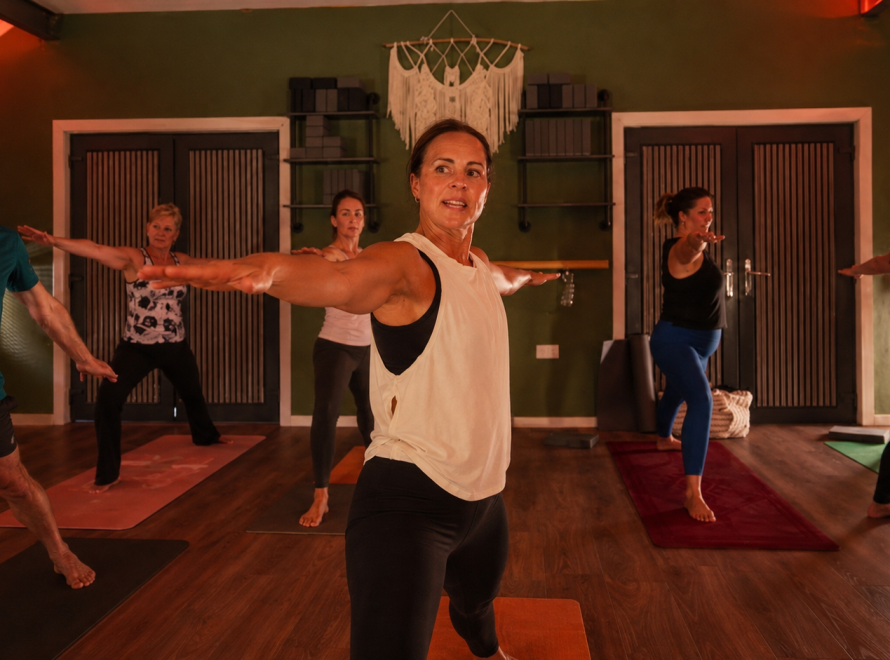
A closer-fitting top can be useful in downward-facing or inverted positions because it is less likely to fall towards your face. If you prefer a looser T-shirt, tuck it into the waistband or wear a comfortable layer beneath it. Neither choice is more “correct”.
For the lower body, choose leggings, fitted shorts, cycling shorts or joggers with enough stretch. Very wide trouser legs can move around the feet and make it harder to see your alignment. Check that waistbands remain comfortable when sitting and folding.
Look for
- stretch without compression or pinching;
- coverage you feel confident in;
- flat or soft seams;
- fabric that stays comfortable when warm;
- layers that are easy to remove.
Test before class
- raise both arms overhead;
- fold forwards gently;
- sit cross-legged or on a chair;
- step into a short lunge;
- check pockets, zips and loose hems.
Supportive underwear or a sports bra is a personal choice. Dynamic classes may make more support comfortable, while Restorative or Yin sessions often suit softer, non-restrictive layers. Remove bulky belts, jewellery or hard hair clips that could press into you when lying down.
What to wear for hot vs unheated yoga
For hot yoga, choose lightweight clothing that manages sweat and stays secure. Fitted shorts, leggings, a breathable vest or supportive top can reduce fabric movement. Cotton may become heavy when wet, although comfort matters more than chasing a particular technical fabric.
Bring a dry layer for travelling home. You may feel cool quickly after leaving the heated room, especially in winter. Avoid thick hoodies inside class, waterproof fabrics or anything that prevents heat from escaping comfortably.
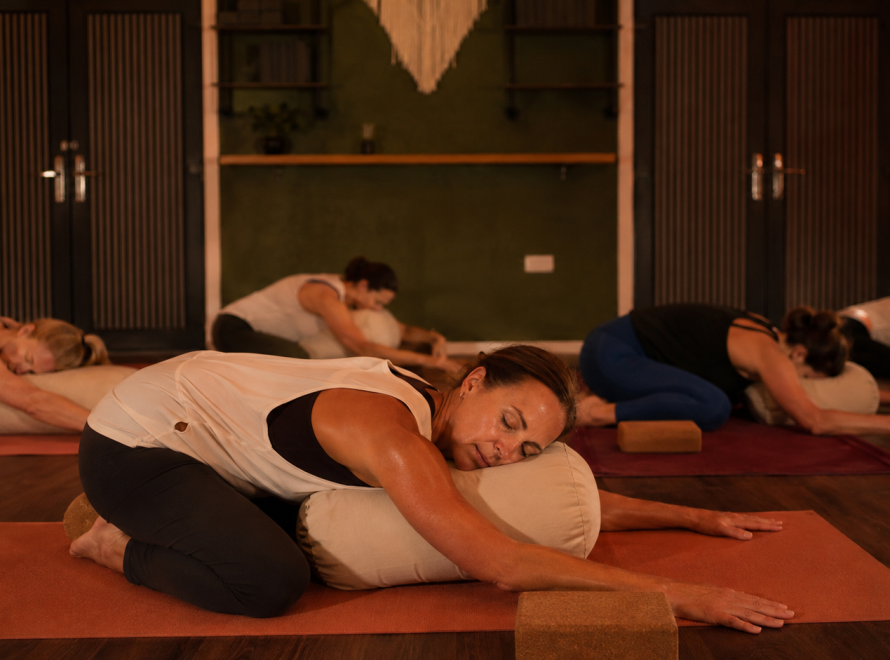
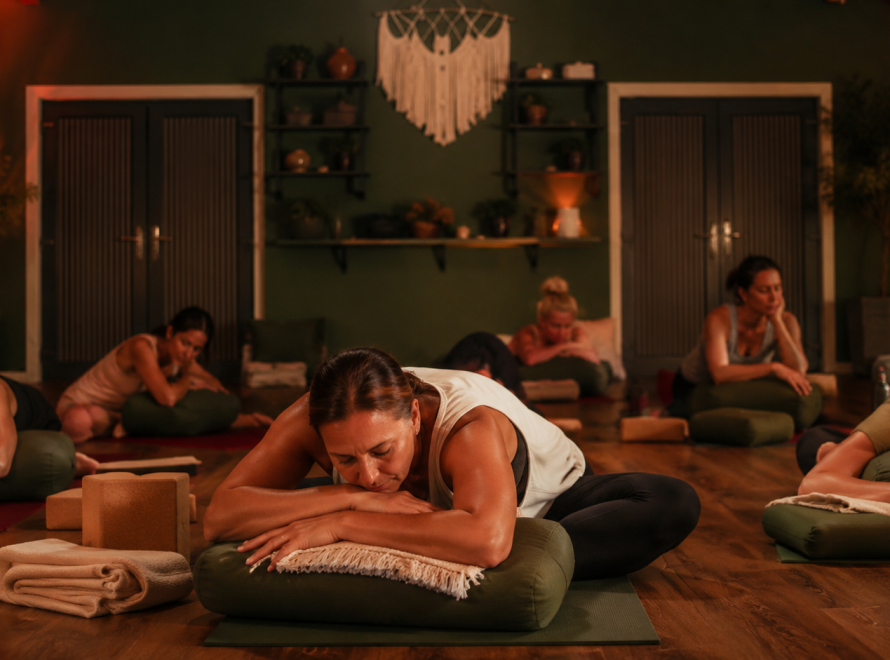
For unheated yoga, use removable layers. A T-shirt or light long-sleeved top over a base layer works well while arriving and during slower sections. In Restorative Yoga or Yoga Nidra, warm socks, a soft jumper and a blanket can help when you remain still.
| Class type | Useful clothing | Extra item |
|---|---|---|
| Hot Yoga | Light, secure, sweat-managing layers. | Large towel and dry clothes for afterwards. |
| Dynamic Flow or Power | Stretchy clothing that stays in place through transitions. | Hair tie and water. |
| Hatha or Slow Flow | Comfortable fitted or semi-fitted layers. | Light top for the final rest. |
| Yin Yoga | Soft, flexible layers with no hard zips. | Warm socks and an extra layer. |
| Restorative or Yoga Nidra | Warm, non-restrictive clothing suitable for lying down. | Cosy jumper and optional eye covering. |
Read Hot Yoga for Beginners if your first session will be heated.
Do you wear shoes or socks for yoga?
Most yoga classes are practised barefoot on a mat. Bare feet provide direct contact with the floor and avoid outdoor shoes bringing dirt into the practice space. Leave shoes in the designated area when you enter the studio.
Ordinary socks can slide, particularly in standing poses. Remove them for active practice unless you need them for a specific reason. Grippy yoga socks may be an option if you prefer coverage, have been advised to wear them or need extra warmth, but ask the teacher whether they are suitable for the class.
Warm socks are useful during savasana, Restorative Yoga and Yoga Nidra when movement has finished. Keep them beside the mat so you can add them without disrupting the class.
If you have a foot condition, healing wound, balance concern or medical reason for footwear, contact the studio before attending. Clean indoor footwear or an adapted practice may be possible; do not risk your safety to follow a barefoot convention.
What to bring to your first yoga class
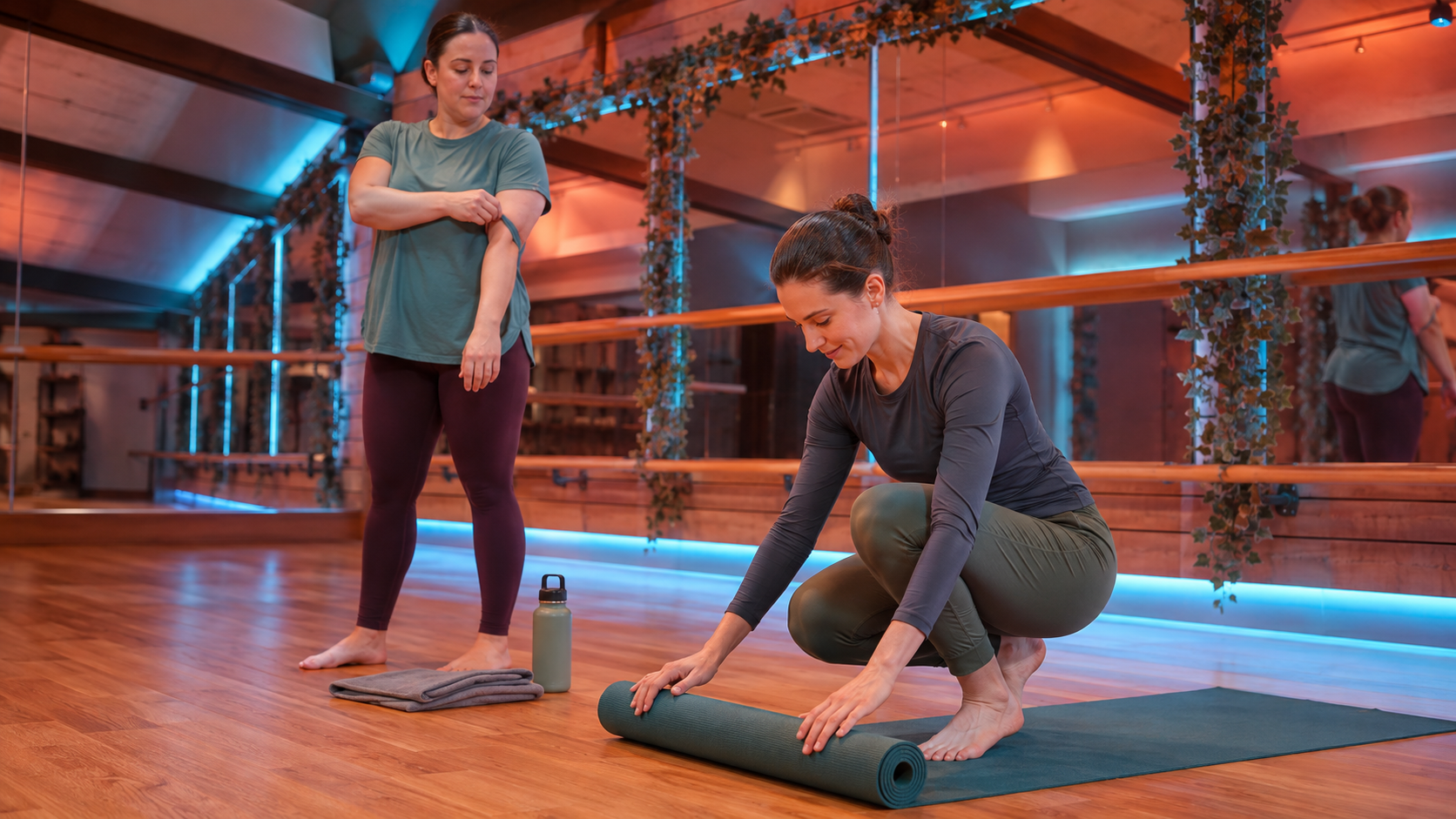
Check the class listing or studio FAQ before packing because mats, blocks and other props may be available. Bringing less is usually easier than arriving with a gym bag full of equipment you do not need.
- Water bottle: especially useful for hot or dynamic classes. Choose one that closes securely.
- Yoga mat: bring your own if you prefer, but check whether the studio supplies or hires them.
- Towel: a small towel for sweat; hot classes may need a larger mat towel.
- Warm layer: useful at the end of unheated classes and during longer rests.
- Hair tie or headband: if hair falls into your face, but avoid hard clips when lying down.
- Required medication: keep prescribed inhalers or other essentials accessible and tell the teacher where appropriate.
- Minimal valuables: leave unnecessary jewellery and expensive items at home.
Food and hydration: avoid a large meal immediately before class, but do not feel you must arrive hungry. Eat and drink in a way that suits you, your health needs and the class intensity.
Simple studio etiquette
Arrive ten to fifteen minutes early for your first visit. This gives you time to find the entrance, check in, use the changing area and speak to the teacher without delaying the class.
Tell the teacher that you are new and mention relevant injuries, pregnancy, joint instability, dizziness or health conditions privately. You can always decline hands-on adjustments. Ask how the studio signals consent rather than assuming touch is part of the class.
- Silence your phone and keep it away from the practice area.
- Remove outdoor shoes where directed.
- Avoid strong perfume or heavily scented products in a shared room.
- Place the mat where instructed and leave reasonable space around others.
- Wipe shared equipment if the studio asks you to.
- Return blocks, bolsters and straps neatly after class.
- Leave quietly if others are still resting.
Late-entry rules vary. If you expect to be delayed, contact the studio rather than rushing into a class after it has begun.
Small clothing changes for different classes
Barre: fitted leggings or shorts make foot and knee placement easier to see. Some studios prefer grip socks, so check the class information. See Barre for Beginners.
Yoga Nidra: prioritise warmth. Soft trousers, layers, socks and a jumper are more useful than technical activewear.
Power, Ashtanga or Vinyasa: choose clothing that stays secure through planks, downward-facing dog and repeated transitions. Avoid unsecured pocket contents.
Cold plunge or wellness sessions: follow the specific preparation list. Swimwear, towels, robes and changing requirements differ from a normal yoga class.
Pregnancy or postnatal classes: choose non-restrictive clothing and seek class-specific guidance. Do not rely on sizing up standard advice where individual support is required.
First yoga class checklist
- Comfortable top that stays secure when you raise your arms or fold forwards.
- Stretchy bottoms that allow a squat and short lunge.
- Easy-to-remove outdoor shoes.
- Water bottle with a secure lid.
- Yoga mat or confirmation that one is available.
- Towel for a hot or sweaty class.
- Warm layer and socks for the final rest.
- Hair tie without hard clips, if needed.
- Required medication kept accessible.
- Arrival planned for ten to fifteen minutes before class.
- Teacher told that you are new and informed of relevant needs.
- Phone silenced before entering the practice room.
If you have the first four essentials—comfortable clothes, water, footwear you can remove and enough time to arrive calmly—you are already well prepared.
Frequently asked questions
Do I need leggings for yoga?
No. Stretchy joggers, shorts or other comfortable exercise trousers can work. Avoid anything so loose that it catches around the feet or restricts movement.
Can I wear a normal T-shirt?
Yes. Test it in a forward fold and with arms overhead. Tuck it in or wear a layer underneath if it falls towards your face.
Do men need special yoga clothes?
No. A comfortable T-shirt or vest with stretchy shorts or joggers is enough. Compression shorts beneath looser shorts may provide extra coverage if preferred.
Should I bring my own mat?
That depends on the studio. Check YogaLife’s current FAQ or contact the team before your visit rather than buying equipment immediately.
What should I avoid wearing?
Avoid restrictive waistbands, hard zips, bulky belts, sharp jewellery, slippery ordinary socks and clothes that require constant adjustment. Comfort and safety are the priority.
Continue planning your first visit
Important: This article provides general information. Contact the studio before class if a health condition, injury, pregnancy, disability or individual access need affects clothing, footwear, equipment or participation.
COMFORTABLE. PREPARED. READY TO MOVE.
Prepare for your first YogaLife visit
Choose a beginner-friendly class, pack the simple essentials and arrive with time to settle in.