
Morning Yoga vs Evening Yoga: Which Is Better for You?
YogaLife Journal
Practice timing guide · Wilmslow & Handforth · Updated September 2026
Morning yoga is not automatically more productive, and evening yoga is not automatically better for relaxation. The best time is the one that matches the type of practice, your energy, your sleep and—most importantly—the time you can attend consistently.
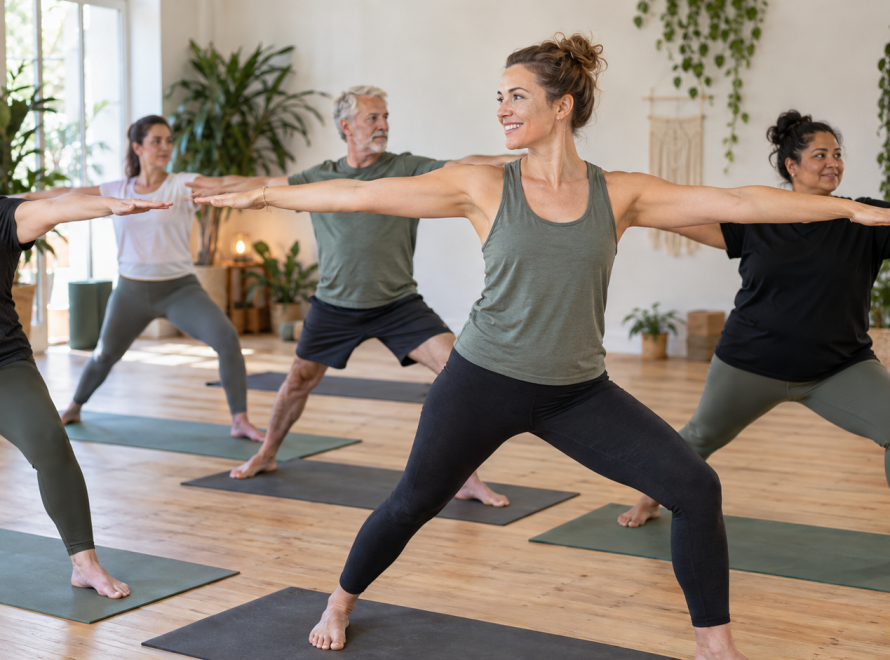
A morning session can create a clear start to the day. An evening session can help separate work from home and provide time for a longer class. Either can be energetic or gentle: timing does not determine style.
This guide will help you choose without relying on rigid rules about the “perfect” hour. For real local options, compare YogaLife’s current timetable and class guide.
Morning and evening yoga: benefits of each
Morning yoga offers a protected time before competing demands appear. For some people, it is easier to keep a commitment before work, travel or family plans change. A short practice may also provide an intentional transition from sleep into the day.
Morning movement often feels stiffer at first. That is not a problem to overcome aggressively. Begin with smaller ranges, gentle joint movement and slower transitions, then build intensity as you become warmer.
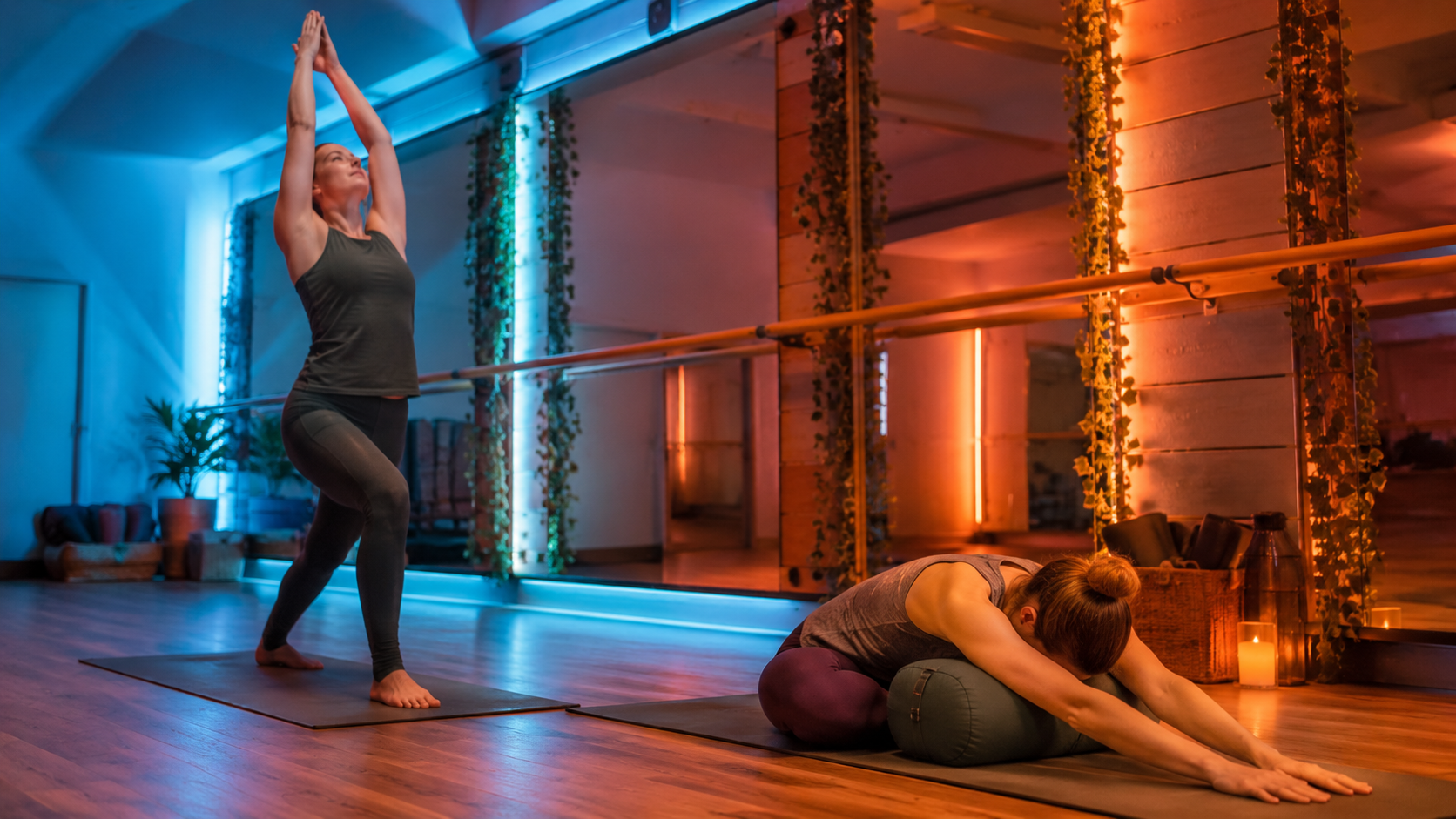
Evening yoga can provide more time and less urgency. You may feel physically warmer after moving throughout the day, and a scheduled class can mark the end of work. Evening sessions also make studio attendance more practical for many people.
The drawback is that plans and fatigue can interfere. A vigorous late class may leave some people feeling alert close to bedtime, while others sleep normally. Your own response matters more than a universal rule.
Morning may suit you if
- your evenings change frequently;
- you enjoy a quiet start;
- a short routine feels achievable;
- you want movement before desk work;
- early sessions do not reduce sleep.
Evening may suit you if
- you dislike rushing after waking;
- your energy improves later;
- you prefer a full studio class;
- you want a boundary after work;
- later practice does not disturb sleep.
Energy, stress and sleep
Yoga can influence how alert or settled you feel, but the effect depends on the session. Sun salutations, standing sequences and strong balances may feel energising. Supported floor positions, comfortable breathing and Yoga Nidra are designed around a different experience.
A morning practice should not come at the cost of sleep. If attending an early class means repeatedly shortening your night, the schedule is working against wellbeing. Prepare clothes and water the night before, but move the session later if you cannot maintain adequate rest.
In the evening, allow time to travel home, eat if needed and settle before bed. People who feel stimulated after Power Yoga, dynamic Flow or hot classes may prefer those earlier. A quieter Yin Yoga, Restorative or Yoga Nidra session may fit later, but even a gentle class is not a guaranteed sleep treatment.
Simple test: track bedtime, ease of falling asleep, morning alertness and enjoyment for two weeks. If late practice regularly delays sleep—or early practice leaves you exhausted—change the time or class intensity.
For a dedicated wind-down plan, read Yoga for Better Sleep: An Evening Routine.
Does timing affect flexibility or performance?
You may feel more mobile later in the day because you are warmer and have already moved. That can make positions feel more accessible, but it does not mean an evening practice produces better long-term flexibility. Regular, well-paced practice matters more than testing maximum range at a particular hour.
In the morning, use a longer progressive warm-up. Start with breathing, gentle spinal movement and comfortable standing work before deeper ranges or demanding balances. Avoid judging progress by comparing a cold morning position with a fully warmed evening one.
If yoga supports another sport, place it according to the total training week. A hard Power or Vinyasa class before an important run or strength session may create fatigue. A short mobility practice can work as preparation, but it should not replace a sport-specific warm-up. See Yoga for Runners for timing examples.
Consistency matters more than the clock
The most effective schedule is one you can repeat without resentment, sleep loss or constant rearranging. One reliable class every week is a stronger foundation than an idealised daily routine that disappears after four days.
Choose an anchor already present in your week. A morning practice might follow brushing your teeth or the school drop-off. An evening class might follow the end of work or take place on a day when dinner arrangements are simple.
- Keep the minimum small: ten minutes can maintain the habit on busy days.
- Book the main session: put a studio class in the diary before the week fills.
- Use two versions: a full routine for normal days and a five-minute version for disrupted ones.
- Review monthly: change the time if missed sessions form a pattern.
- Protect recovery: count demanding yoga within your overall exercise load.
For frequency guidance, see How Often Should You Do Yoga?.
Choosing a class time and style
Match intensity to the demands around it. An early dynamic class can work well when you enjoy mornings and can arrive rested. A lunchtime session may break up desk work. A strong evening class can be satisfying when there is enough time to settle afterwards.
Also consider meals and hydration. A large meal immediately before a dynamic class may feel uncomfortable; allow time to digest according to what suits you. Bring water, particularly for heated or demanding sessions, and do not use an empty stomach as a badge of discipline.
| Situation | Timing that may work | Practical approach |
|---|---|---|
| Busy evenings | Morning or lunchtime | Choose a short repeatable session and protect bedtime. |
| Slow morning energy | Late morning or evening | Avoid forcing an early routine that you continually miss. |
| Desk-based working day | Before work, lunch or straight after work | Use movement as a clear transition around sitting. |
| Strength or running plan | Away from priority hard sessions | Treat dynamic yoga as training that may need recovery. |
| Sleep wind-down | Early evening | Select a quiet style and leave time to settle afterwards. |
| Changing shifts | Relative to waking, not clock time | Use a flexible routine built around the sleep schedule. |
Sample morning and evening routines
These short outlines are general movement ideas, not treatment plans. Move within a comfortable range and stop if you experience sharp pain, dizziness, numbness or symptoms that concern you.
Ten-minute morning reset
- One minute of easy standing or seated breathing.
- Six slow shoulder circles and side reaches.
- Six rounds of cat–cow or a standing spinal wave.
- Three gentle half sun salutations.
- Two low lunges on each side with support.
- Three controlled chair-pose repetitions.
- One minute standing still before starting the day.
Fifteen-minute evening wind-down
- Two minutes of comfortable breathing.
- Slow cat–cow and an easy child’s-pose variation.
- A supported low lunge on each side.
- A comfortable seated or reclined twist.
- Reclined figure-four with no forcing.
- Supported rest with lower legs on a chair for three to five minutes.
Keep the morning sequence smaller when you feel stiff. Keep the evening sequence earlier or gentler if it leaves you alert at bedtime.
Morning or evening yoga: a practical decision guide
- Protect sleep first. Do not build a morning habit by repeatedly cutting rest.
- Identify your most reliable window. Look at the week you actually have, not an imaginary perfect one.
- Match the style to the time. Choose energising or calming according to how you respond.
- Run a two-week trial. Keep the same time long enough to assess attendance, energy and sleep.
- Use a mixed schedule if helpful. A short morning practice and one evening studio class can coexist.
There is no need to declare yourself a morning or evening yoga person permanently. Seasons, work, family and training change. The right answer can change with them.
Frequently asked questions
Is it better to do yoga before or after breakfast?
Choose what feels comfortable for the style and duration. Some people prefer a light snack before morning practice; others eat afterwards. Avoid rigid fasting rules and allow time after a larger meal.
Can evening yoga help me sleep?
A quiet routine may help some people wind down, but yoga is not a guaranteed treatment for insomnia. Persistent sleep problems should receive appropriate professional advice.
Can I do Power Yoga at night?
Yes, if you enjoy it and it does not affect sleep. Leave time to cool down and monitor your own response across several sessions.
Is morning yoga better for weight loss?
No particular time guarantees weight loss. Overall activity, nutrition, sleep and consistency matter more than whether yoga happens before or after work.
Can I practise both morning and evening?
Yes, but both sessions do not need to be demanding. A brief morning mobility routine and a fuller evening class can be a manageable combination.
Continue exploring YogaLife
Further reading
- NHS: How to get to sleep
- NHS: Physical activity guidelines for adults
- NCCIH: Yoga—effectiveness and safety
Important: This article provides general information and is not medical advice. Work within your own limits and seek professional guidance when a health condition, injury, pregnancy or persistent symptom may affect participation.
FIND YOUR TIME. KEEP YOUR PRACTICE.
Choose a class that fits your week
Compare morning, daytime and evening sessions on the current YogaLife timetable.