

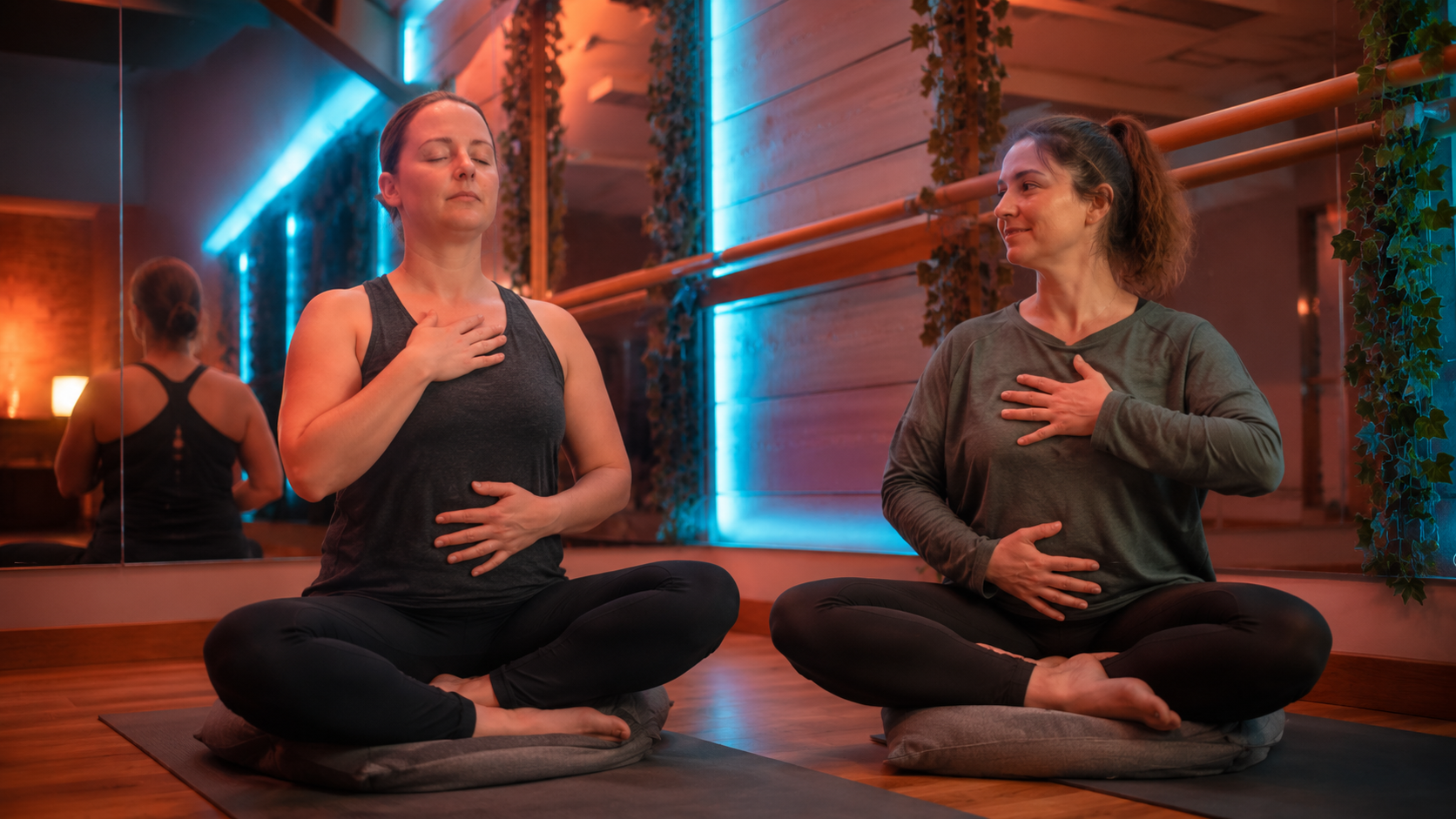
Breathwork for Beginners: Simple Techniques and What to Expect
YogaLife Journal
Beginner breathwork guide · Wilmslow & Handforth · Updated September 2026
Breathwork is an umbrella term for deliberately changing—or simply observing—how you breathe. For a beginner, the safest place to start is gentle, comfortable breathing without force, long breath-holds or rapid cycles.
You already meet breath awareness in many yoga classes: a teacher may invite you to notice the breath, coordinate it with movement or lengthen the exhale while resting. Dedicated breathwork can be broader, ranging from quiet relaxation practices to intense methods that deliberately alter breathing.
This guide stays with low-intensity techniques. They can offer a useful pause and may help some people feel calmer, but they are not treatments for respiratory, cardiovascular or mental health conditions. Explore YogaLife’s wellness classes or ask the team which sessions include guided breathing.
What is breathwork?
Breathing normally happens automatically. Breathwork brings deliberate attention to its pace, depth, route or rhythm. A practice may ask you to breathe naturally and observe, use a comfortable count, extend the exhale slightly or coordinate breathing with movement.
In yoga, breathing practices are often discussed under the broader tradition of pranayama. Modern breathwork classes may borrow from yoga, meditation, relaxation training and other systems. Because the label covers very different methods, it does not tell you how intense or appropriate a session will be.
Gentle beginner practice
- quiet observation;
- unforced nasal breathing where comfortable;
- easy, even counting;
- a slightly longer exhale;
- permission to return to normal breathing.
More intense methods
- rapid or very deep repeated breathing;
- long breath-holds;
- breathing designed to create strong sensations;
- competitive targets;
- methods requiring individual screening.
A strong physical sensation is not proof that a technique is effective. Tingling, light-headedness and hand or facial sensations can occur when someone over-breathes and changes carbon dioxide levels. Beginners should not chase these effects.
Three gentle breathwork techniques for beginners
Practise seated with back support or lying down in a safe, comfortable place. Never practise while driving, in water, in the bath or anywhere that dizziness could cause harm. Stop at once if you feel unwell.
1. Natural breath observation
- Place both feet on the floor or lie with knees supported.
- Allow the breath to move without trying to deepen it.
- Notice where movement is easiest to feel: nose, ribs, chest or abdomen.
- Count ten ordinary breaths, then let attention widen to the room.
This is a useful starting point when controlling the breath increases anxiety. The goal is observation, not correction.
2. Comfortable equal breathing
- Breathe in gently through the nose if comfortable.
- Use an easy count, such as three on the inhale.
- Breathe out for the same count through the nose or softly through the mouth.
- Repeat for one to three minutes without pausing between breaths.
If three feels too long, count to two. If counting feels restrictive, return to natural breathing. Bigger breaths are not required.
3. Slightly longer exhale
- Take an ordinary, comfortable inhale for a count of two or three.
- Let the exhale last one count longer.
- Keep the breath quiet and smooth; do not empty the lungs forcefully.
- Continue for five to ten cycles, then breathe normally.
This may feel settling for some people. If it creates air hunger, breathlessness or tension, shorten the count or stop.
The golden rule: breathing should remain comfortable enough that you could stop the technique and return to your normal rhythm immediately. Do not force depth, duration or stillness.
Potential benefits and what the evidence says
Slow, comfortable breathing can give attention a simple focus and may help some people reduce feelings of immediate stress. The NHS describes a gentle breathing exercise for stress that can be practised regularly and emphasises letting the breath move comfortably rather than forcing it.
Research uses varied techniques, session lengths and participant groups, so broad claims about “breathwork” should be treated cautiously. A study of one structured breathing method cannot prove that every rapid, held or intensive technique produces the same result.
Reasonable beginner goals include creating a pause, noticing tension, developing awareness of breathing habits and supporting a transition into or out of yoga. Avoid claims that breathwork detoxifies the body, permanently resets the nervous system, replaces therapy or medication, cures asthma, or guarantees better sleep.
For people with asthma, breathing exercises may support quality of life or hyperventilation symptoms in some research, but they do not replace inhalers, action plans or medical care. Never delay prescribed treatment in favour of a breathing technique.
What to expect in a breathwork session
A well-led beginner session should explain the method, offer a comfortable position, describe what sensations are and are not expected, and make stopping easy. You may sit on a chair or cushion, lie on a mat, or combine breath awareness with gentle movement.
The teacher may begin with natural breathing, introduce a simple count, allow quiet practice and finish with time to reorient. There should be no pressure to breathe more deeply than comfortable or to share a personal experience afterwards.
| Stage | What may happen | Your options |
|---|---|---|
| Arrival | Health and comfort check; explanation of the method. | Tell the teacher about relevant conditions or opt out. |
| Position | Seated or lying with props and support. | Change position whenever needed. |
| Observation | Notice natural breathing without changing it. | Keep eyes open and attention on the room. |
| Technique | Gentle count or breath cue for a short period. | Use a shorter count or return to normal breathing. |
| Rest | Quiet pause before sitting or standing. | Move slowly and ask for support if light-headed. |
Emotional responses can vary. Some people feel relaxed; others feel bored, restless or more aware of anxiety. None of these reactions means you have failed. Breath focus is not suitable for everyone, and external grounding—feeling the feet, looking around the room or listening to sounds—may be a better option.
Breathwork safety and when to stop
Stop the exercise and return to ordinary breathing if you feel dizzy, faint, confused, unusually breathless, panicky, numb, tingling or unwell. Sit or lie safely and do not stand quickly. Seek urgent medical help for chest pain, fainting, severe breathing difficulty or symptoms that do not settle.
Speak to an appropriate healthcare professional before breathwork if you have a heart or lung condition, uncontrolled blood pressure, seizures, a history of fainting, significant panic symptoms, recent surgery, pregnancy, or another condition affected by breathing changes. Follow condition-specific advice and keep prescribed medication accessible.
Intensive practices involving rapid breathing, repeated deep breathing or prolonged holds require greater caution and are not included in this beginner guide. Breath-holding should never be practised in water or while driving. Children should practise only through appropriately qualified, age-suitable guidance.
Breathwork is not an emergency response for an asthma attack, chest pain or acute mental health crisis. Use the treatment or support plan recommended for that situation.
How to integrate breathwork with yoga
Begin with one to three minutes rather than adding a long standalone practice. At the start of class, observe natural breathing while arriving. During movement, use the breath as a pacing guide without forcing every movement to match perfectly. At the end, try a few comfortable equal breaths before resting.
Gentle breath awareness fits well with Restorative Yoga and Yoga Nidra, Yin Yoga and slower classes. Dynamic classes also use breath, but effort can make a fixed count inappropriate. Breathe normally and rest if you cannot speak or recover comfortably.
Do not use controlled breathing to ignore pain, dizziness, overheating or excessive exertion. Breath is information, not a command to continue.
A five-minute beginner routine
- Settle for one minute: sit supported, feel your feet and look around the room.
- Observe for one minute: notice ordinary breaths without changing them.
- Count gently for two minutes: use an easy equal count or let the exhale be one count longer.
- Return to normal for one minute: release counting and notice how you feel.
- Finish deliberately: move hands and feet, open the eyes and stand only when steady.
Practise once daily or a few times per week if it feels useful. Consistency may help familiarity, but there is no requirement to extend the count or duration.
Frequently asked questions
Should I breathe through my nose or mouth?
Gentle nasal breathing may be comfortable at rest, while the NHS exercise uses breathing in through the nose and out through the mouth. Use the route that feels easy unless a clinician has advised otherwise. Do not force breathing through a blocked nose.
Why do I feel dizzy during breathwork?
You may be breathing too quickly or deeply. Stop, return to normal breathing and sit or lie safely. Repeated or unexplained dizziness needs professional advice.
How long should a beginner practise?
One to five minutes is enough to learn a gentle technique. Longer is not automatically better. Stop earlier if attention to breathing feels uncomfortable.
Can breathwork replace therapy or medication?
No. It may be used as a general wellbeing practice, but it should not replace prescribed treatment, psychological support or medical assessment.
Is breathwork the same as meditation?
They can overlap. Breathwork deliberately uses or observes breathing; meditation may use breath as one focus among many without changing it.
Continue exploring YogaLife
Further reading
- NHS: Breathing exercises for stress
- Cambridge University Hospitals: Breathing exercises and hyperventilation
- NCCIH: Breathing techniques and asthma evidence
Important: This article provides general information and is not medical advice. Stop if breathing practice makes you feel unwell. Seek professional guidance when a health condition, pregnancy, medication or persistent symptom may affect participation.
START GENTLY. BREATHE COMFORTABLY.
Explore breathwork and wellness classes
Find a YogaLife session with clear guidance, comfortable options and space to practise at your own pace.